Workout Mistakes That Can Slow Your Progress
Are you working out regularly but not seeing the results you expected? You may be training hard, spending hours at the gym and following different exercises, yet your strength, muscle growth or fitness improvements may have slowed down.
The problem isn’t always a lack of effort. Sometimes, small mistakes in your workout routine, exercise technique, nutrition and recovery can prevent you from making consistent progress.
Let’s explore the most common workout mistakes and how to correct them to get better results from every training session.
1. Skipping Your Warm-Up
One of the most common workout mistakes is starting heavy exercises without preparing your body.
A proper warm-up gradually increases your heart rate, prepares your muscles and helps you practise the movements you are about to perform.
How to improve:
- Spend 5–10 minutes on light cardio.
- Perform dynamic mobility exercises.
- Include lighter warm-up sets before heavy lifts.
- Prepare the specific muscles you will train.
Avoid jumping directly into heavy squats, deadlifts or bench presses.
2. Lifting Too Heavy With Poor Technique
Lifting heavier weights can help build strength, but sacrificing exercise technique just to lift more weight can reduce the quality of your training.
Poor technique may also increase unnecessary stress on your joints and muscles.
How to improve:
- Choose weights you can control.
- Maintain proper movement patterns.
- Use a comfortable range of motion.
- Increase resistance gradually.
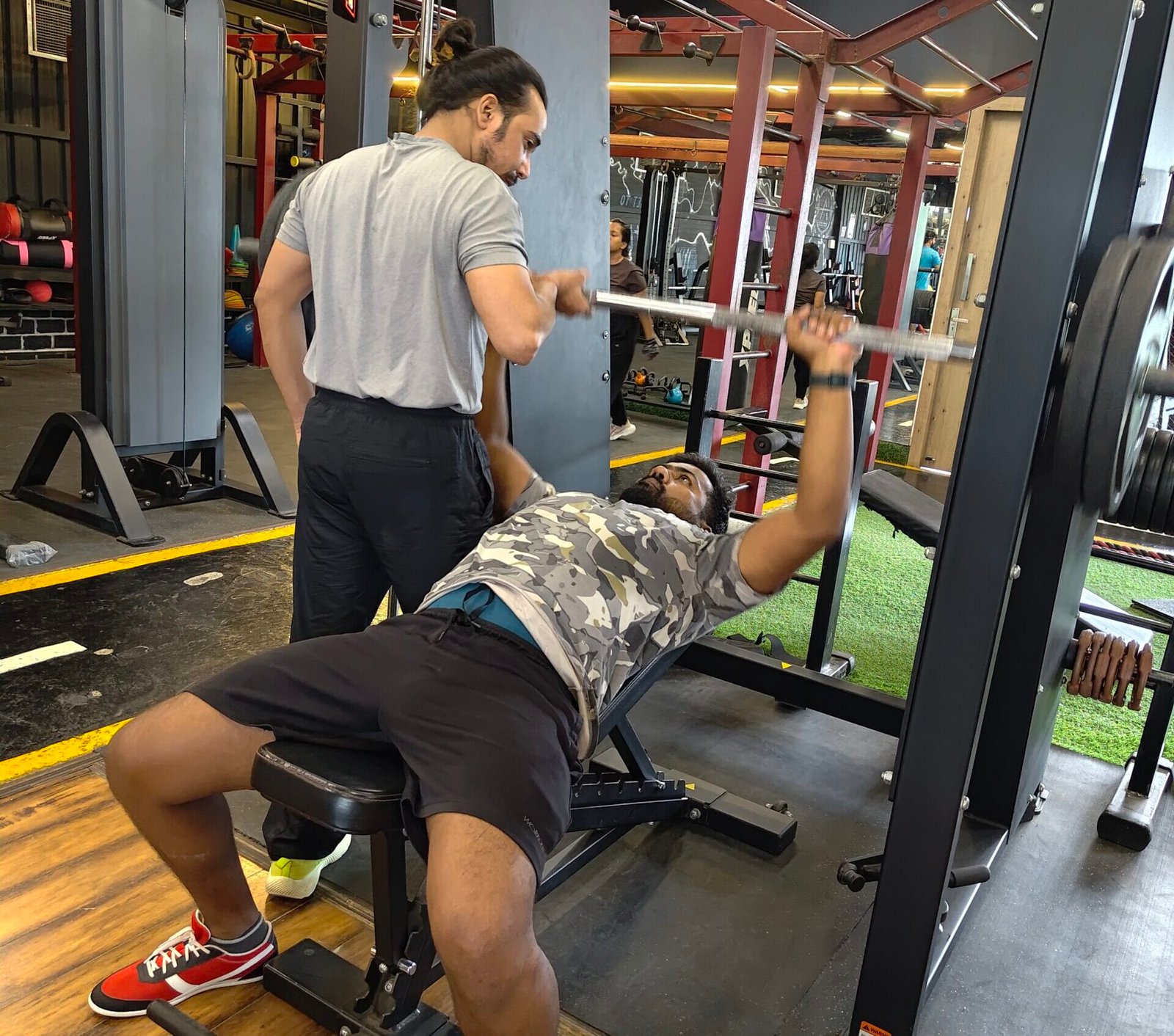
- Ask a qualified trainer to check your technique.
Remember, controlled repetitions are more valuable than simply lifting heavier weights.
3. Not Following Progressive Overload
Your muscles adapt to training over time. If you continue performing the same exercises with identical weights and repetitions, your progress may eventually slow down.
Progressive overload means gradually increasing the demands placed on your muscles.
You can achieve this by:
- Increasing the weight.
- Performing additional repetitions.
- Adding sets when appropriate.
- Improving exercise technique.
- Increasing movement control or range of motion.
For example, if you can comfortably perform 10 repetitions with a particular weight, you may gradually progress to 12 repetitions before increasing the resistance.
4. Changing Your Workout Routine Too Frequently
Trying new exercises is exciting, but changing your entire workout programme every few days can make progress difficult to measure.
Your body needs consistent training exposure to develop strength and improve exercise performance.
How to improve:
- Follow a structured workout programme.
- Maintain key exercises for several weeks.
- Track your sets, repetitions and weights.
- Make changes based on progress rather than boredom.
Consistency allows you to understand whether your training is actually working.
5. Ignoring Rest and Recovery
Muscle development does not happen only during your workout. Recovery is an essential part of the muscle-building process.
Training the same muscles intensely without sufficient recovery may affect performance and increase accumulated fatigue.
How to improve:
- Allow appropriate recovery between demanding sessions.
- Aim for 7–9 hours of sleep.
- Include rest days in your programme.
- Adjust training volume when fatigue builds up.
- Consider a deload period when necessary.
More workouts do not automatically mean better results.
6. Doing Too Much Cardio and Ignoring Strength Training
Cardio is beneficial for cardiovascular health, endurance and energy expenditure. However, if your goal is muscle gain or strength development, relying only on cardio may not be ideal.
Resistance training provides the stimulus needed to develop and maintain muscle.
How to improve:
- Include strength training regularly.
- Train all major muscle groups.
- Combine cardio with resistance training.
- Adjust cardio volume according to your goals and recovery.
A balanced programme supports overall fitness.
7. Neglecting Proper Nutrition
Even an excellent workout programme cannot compensate for consistently poor nutrition.
Your body needs adequate energy and nutrients to support training, recovery and muscle development.
How to improve:
- Include sufficient protein in your diet.
- Eat vegetables and fruits regularly.
- Consume appropriate amounts of carbohydrates.
- Include healthy fats.
- Maintain hydration.
- Adjust calorie intake according to your fitness goal.
For muscle gain, adequate calories and protein are important. For fat loss, a sustainable calorie deficit is generally required.
8. Not Drinking Enough Water
Hydration is important for physical performance and temperature regulation.
Insufficient fluid intake can contribute to fatigue, reduced exercise performance and difficulty maintaining workout intensity.
How to improve:
- Drink water throughout the day.
- Pay attention to fluid loss during exercise.
- Increase fluid intake when training in hot conditions.
- Replace fluids after intense sweating.
Do not wait until you feel extremely thirsty to start drinking water.
9. Training Without a Clear Goal
Walking into the gym without a plan can lead to random exercise selection, inconsistent training and difficulty measuring improvement.
Your workout should be designed around your specific fitness objective.
For example:
| Fitness Goal | Training Focus |
|---|---|
| Muscle Gain | Resistance training and progressive overload |
| Fat Loss | Strength training, cardio and nutrition |
| Strength | Compound lifts and structured progression |
| Stamina | Cardiovascular and conditioning exercises |
| General Fitness | Balanced strength, cardio and mobility |
Having a clear goal helps you select exercises and measure results more effectively.
10. Ignoring Compound Exercises
Compound exercises involve multiple joints and muscle groups working together.
Exercises such as squats, deadlifts, bench presses, overhead presses and rows are valuable for developing overall strength.
Focusing only on isolation exercises may leave important movement patterns undertrained.
How to improve:
- Include suitable compound movements.
- Add isolation exercises for specific muscle groups.
- Prioritise correct technique.
- Choose exercises according to your experience and goals.
A balanced workout programme can include both compound and isolation exercises.
11. Training Every Set to Failure
Training to muscular failure can be useful in certain situations, but taking every set to complete failure may create unnecessary fatigue.
This can affect the quality of subsequent exercises and your ability to recover.
How to improve:
- Keep some repetitions in reserve on most working sets.
- Use failure selectively when appropriate.
- Prioritise technique over exhaustion.
- Adjust intensity according to your experience and recovery.
Remember, an effective workout does not require you to exhaust yourself in every set.
12. Not Tracking Your Workout Progress
If you do not record your workouts, it becomes difficult to know whether your training is improving.
A workout journal helps you identify patterns and make informed adjustments.
Track these details:
- Exercise names.
- Weight lifted.
- Sets and repetitions.
- Workout duration.
- Exercise performance.
- Recovery and fatigue.
Review your records regularly to understand where you are improving and where adjustments are needed.
13. Comparing Your Progress With Others
Every individual has a different fitness background, body structure, training experience and recovery capacity.
Comparing your progress with someone else’s can create unrealistic expectations.
Instead, focus on your own improvements.
How to improve:
- Set realistic fitness targets.
- Track your personal performance.
- Celebrate small improvements.
- Focus on consistency.
- Avoid copying advanced training routines without considering your fitness level.
Your biggest competition should be your previous performance.
14. Ignoring Pain and Warning Signs
Muscle fatigue after training is common, but sharp pain, persistent joint discomfort or unusual symptoms should not be ignored.
Continuing to train through significant pain can make an existing problem worse.
How to improve:
- Stop exercises that cause sharp or unusual pain.
- Review your technique and training load.
- Allow adequate recovery.
- Consult a qualified healthcare professional when pain persists.
Never confuse effective training with pushing through every warning sign.
A Simple Checklist for Better Workout Progress
Before your next gym session, remember these important habits:
- Complete an appropriate warm-up.
- Follow a structured workout programme.
- Maintain correct exercise technique.
- Apply progressive overload gradually.
- Eat according to your fitness goals.
- Stay adequately hydrated.
- Allow sufficient recovery.
- Record your workout performance.
- Maintain consistency.
How to Get Better Results From Your Gym Routine
Improving your fitness does not always require longer workouts or more exercises. Sometimes, correcting a few basic mistakes can make a significant difference.
Focus on these five principles:
- Train with a plan: Follow a programme designed around your goals.
- Prioritise technique: Perform every repetition with control.
- Progress gradually: Challenge your muscles without rushing.
- Recover properly: Give your body enough time to adapt.
- Stay consistent: Follow your routine long enough to evaluate results.
The objective is not simply to work harder. It is to train smarter and make sustainable improvements.
Train Smarter at Akhada – The Right Track Gym, Indore
Getting results from the gym requires more than just showing up. The right combination of structured workouts, proper exercise technique, nutrition and recovery can help you move towards your fitness goals.
At Akhada – The Right Track Gym, Indore, you can work towards muscle gain, strength improvement, better stamina and overall fitness through structured strength training, cardio, functional workouts and personal training guidance.
Whether you are a beginner or an experienced gym-goer, following a suitable workout programme can help you make every training session count.
Visit Us: 3rd Floor, Press Complex, LIG Circle, AB Road, Near Dainik Bhaskar, Indore, Madhya Pradesh – 452011.
Call: +91 9111100683
Train with purpose. Avoid common mistakes. Keep progressing!
Frequently Asked Questions (FAQs)
1. What is the most common workout mistake?
One common mistake is lifting weights with poor technique. Other mistakes include skipping warm-ups, ignoring recovery and not following a structured programme.
2. Why am I not seeing results despite working out regularly?
Your progress may be affected by inadequate nutrition, insufficient recovery, lack of progressive overload or inconsistent training.
3. Should I change my workout routine every week?
No. Following a structured routine for several weeks allows you to track performance and build strength. Change exercises when there is a clear training reason.
4. Is training every day bad for muscle growth?
Not necessarily, but training intensely every day without sufficient recovery can lead to excessive fatigue. Your programme should balance training and rest.
5. How important is progressive overload?
Progressive overload helps your body adapt to increasing training demands. It is an important principle for developing muscle and strength.
6. Is lifting heavier weights always better?
No. Proper technique, controlled movement and appropriate resistance are more important than lifting the heaviest possible weight.