Kettlebell Training: The Complete Guide to Strength, Fat Loss, Endurance & Functional Fitness
Introduction
Want a workout that builds strength, burns calories, improves cardiovascular fitness, and enhances athletic performance—all with a single piece of equipment?
That’s exactly why Kettlebell Training has become one of the fastest-growing fitness methods worldwide.
Unlike traditional gym machines that often isolate individual muscles, kettlebell exercises combine multiple movement patterns into one workout. Every swing, press, squat, clean, and carry challenges your muscles, cardiovascular system, balance, and coordination at the same time.
Whether your goal is weight loss, muscle gain, functional strength, or simply becoming fitter for daily life, kettlebell workouts offer an efficient and versatile training option.
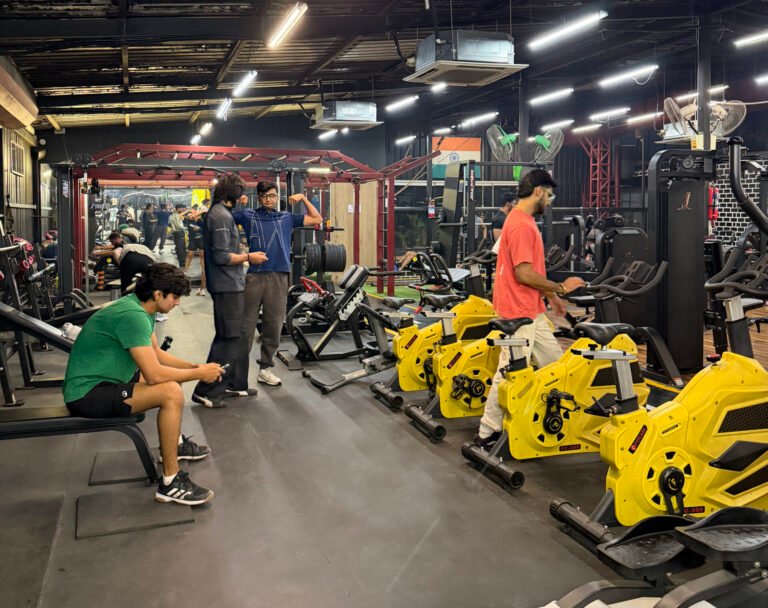
At Akhada Gym, kettlebell training is incorporated into functional fitness programs to help members improve movement quality, strength, and overall conditioning.
In this complete guide, you’ll learn:
- What kettlebell training is
- Why it’s effective
- Its key benefits
- How to choose the right kettlebell
- Essential safety tips
- Common beginner mistakes
- How to get started confidently
What is Kettlebell Training?
A kettlebell is a cast-iron or steel weight with a handle attached to the top. Unlike a dumbbell, its center of mass extends away from the handle, creating unique movement demands that challenge stability, grip, and coordination.
Kettlebell Training involves performing dynamic and strength-based exercises using this tool to improve:
✅ Strength
✅ Power
✅ Endurance
✅ Mobility
✅ Balance
✅ Coordination
Because many kettlebell movements involve multiple joints and muscle groups, they can provide an efficient full-body workout.
Why is Kettlebell Training So Popular?
Fitness enthusiasts, athletes, and beginners alike choose kettlebells because they are:
- Space-efficient
- Versatile
- Suitable for full-body workouts
- Effective for combining strength and conditioning
- Adaptable for different fitness levels
With a single kettlebell, you can perform dozens of exercises targeting the entire body.
Benefits of Kettlebell Training
1. Full-Body Workout
Most kettlebell exercises involve the legs, hips, core, shoulders, and upper body simultaneously.
2. Functional Strength
Kettlebell movements often mirror everyday actions such as lifting, carrying, pushing, and pulling, making them valuable for functional fitness.
3. Improved Cardiovascular Fitness
Exercises like swings and kettlebell circuits elevate the heart rate while also challenging muscular endurance.
4. Better Core Stability
Nearly every kettlebell movement requires the core to stabilize the body throughout the exercise.
5. Enhanced Grip Strength
Holding and controlling the kettlebell naturally develops stronger hands and forearms.
6. Improved Balance & Coordination
The offset weight distribution encourages better body awareness and coordination.
7. Supports Weight Loss
Kettlebell workouts can be an effective part of a balanced exercise program aimed at improving body composition when paired with appropriate nutrition.
8. Builds Muscular Endurance
High-repetition kettlebell workouts help improve muscular stamina.
9. Time-Efficient Training
A well-designed kettlebell workout can train multiple fitness qualities in a relatively short session.
10. Suitable for Different Fitness Levels
Beginners can learn basic movement patterns with lighter kettlebells, while experienced lifters can use heavier weights and more advanced techniques.
Kettlebell vs Dumbbells
| Kettlebells | Dumbbells |
|---|---|
| Offset center of mass | Balanced weight distribution |
| Excellent for dynamic movements | Ideal for traditional strength exercises |
| Strong emphasis on grip and stability | Easier for isolation exercises |
| Commonly used in functional fitness | Commonly used in bodybuilding and general strength training |
Both tools are valuable and can complement each other in a well-rounded fitness program.
Types of Kettlebells
Cast Iron Kettlebells
A popular choice for general fitness and strength training.
Competition Kettlebells
Designed with a uniform size regardless of weight, making them common in kettlebell sport.
Adjustable Kettlebells
Allow multiple weight settings in a single unit, making them convenient for home gyms.
How to Choose the Right Kettlebell
Your ideal kettlebell depends on your experience, strength, and exercise selection.
General guidance:
- Beginners: Start with a weight that allows you to perform movements with good technique while still feeling challenged.
- Intermediate: Gradually increase weight as your form and confidence improve.
- Advanced: Use heavier kettlebells for strength-focused movements while maintaining proper control.
Rather than chasing heavier weights quickly, prioritize mastering movement quality first.
Essential Equipment
To get started, you don’t need a large gym setup.
Useful equipment includes:
- Kettlebell
- Exercise Mat
- Flat Training Shoes
- Water Bottle
- Resistance Band (optional)
- Timer or Fitness App
Safety Tips
✔ Warm up thoroughly before training.
✔ Learn proper technique before increasing weight.
✔ Maintain a neutral spine during lifting movements.
✔ Engage your core throughout each exercise.
✔ Keep the workout area clear of obstacles.
✔ Stop if you experience sharp or unusual pain.
If you’re new to kettlebell training or returning after an injury, consider learning under the guidance of a qualified fitness professional.
Common Beginner Mistakes
Avoid these common errors:
❌ Choosing a kettlebell that is too heavy.
❌ Rounding the back during swings or deadlifts.
❌ Lifting with the arms instead of generating power from the hips.
❌ Skipping warm-ups.
❌ Holding your breath throughout the exercise.
❌ Performing fast repetitions without proper control.
Good technique should always come before speed or heavier loads.
Why Kettlebell Training Works
Kettlebell exercises combine strength, coordination, balance, and conditioning into a single training session. This makes them an efficient choice for people looking to improve overall fitness while keeping workouts engaging and varied.
Whether you’re aiming to lose weight, build strength, or simply move better, kettlebell training can be adapted to support a wide range of fitness goals when performed consistently and with proper technique.
Kettlebell Training: The Complete Guide to Strength, Fat Loss, Endurance & Functional Fitness
Focus Keyword: Kettlebell Training
Secondary Keywords: Kettlebell Workout, Kettlebell Exercises, Functional Strength Training, Kettlebell Workout for Beginners, Full Body Kettlebell Workout
Introduction
Want a workout that builds strength, burns calories, improves cardiovascular fitness, and enhances athletic performance—all with a single piece of equipment?
That’s exactly why Kettlebell Training has become one of the fastest-growing fitness methods worldwide.
Unlike traditional gym machines that often isolate individual muscles, kettlebell exercises combine multiple movement patterns into one workout. Every swing, press, squat, clean, and carry challenges your muscles, cardiovascular system, balance, and coordination at the same time.
Whether your goal is weight loss, muscle gain, functional strength, or simply becoming fitter for daily life, kettlebell workouts offer an efficient and versatile training option.
At Akhada Gym, kettlebell training is incorporated into functional fitness programs to help members improve movement quality, strength, and overall conditioning.
In this complete guide, you’ll learn:
- What kettlebell training is
- Why it’s effective
- Its key benefits
- How to choose the right kettlebell
- Essential safety tips
- Common beginner mistakes
- How to get started confidently
What is Kettlebell Training?
A kettlebell is a cast-iron or steel weight with a handle attached to the top. Unlike a dumbbell, its center of mass extends away from the handle, creating unique movement demands that challenge stability, grip, and coordination.
Kettlebell Training involves performing dynamic and strength-based exercises using this tool to improve:
✅ Strength
✅ Power
✅ Endurance
✅ Mobility
✅ Balance
✅ Coordination
Because many kettlebell movements involve multiple joints and muscle groups, they can provide an efficient full-body workout.
Why is Kettlebell Training So Popular?
Fitness enthusiasts, athletes, and beginners alike choose kettlebells because they are:
- Space-efficient
- Versatile
- Suitable for full-body workouts
- Effective for combining strength and conditioning
- Adaptable for different fitness levels
With a single kettlebell, you can perform dozens of exercises targeting the entire body.
Benefits of Kettlebell Training
1. Full-Body Workout
Most kettlebell exercises involve the legs, hips, core, shoulders, and upper body simultaneously.
2. Functional Strength
Kettlebell movements often mirror everyday actions such as lifting, carrying, pushing, and pulling, making them valuable for functional fitness.
3. Improved Cardiovascular Fitness
Exercises like swings and kettlebell circuits elevate the heart rate while also challenging muscular endurance.
4. Better Core Stability
Nearly every kettlebell movement requires the core to stabilize the body throughout the exercise.
5. Enhanced Grip Strength
Holding and controlling the kettlebell naturally develops stronger hands and forearms.
6. Improved Balance & Coordination
The offset weight distribution encourages better body awareness and coordination.
7. Supports Weight Loss
Kettlebell workouts can be an effective part of a balanced exercise program aimed at improving body composition when paired with appropriate nutrition.
8. Builds Muscular Endurance
High-repetition kettlebell workouts help improve muscular stamina.
9. Time-Efficient Training
A well-designed kettlebell workout can train multiple fitness qualities in a relatively short session.
10. Suitable for Different Fitness Levels
Beginners can learn basic movement patterns with lighter kettlebells, while experienced lifters can use heavier weights and more advanced techniques.
Kettlebell vs Dumbbells
| Kettlebells | Dumbbells |
|---|---|
| Offset center of mass | Balanced weight distribution |
| Excellent for dynamic movements | Ideal for traditional strength exercises |
| Strong emphasis on grip and stability | Easier for isolation exercises |
| Commonly used in functional fitness | Commonly used in bodybuilding and general strength training |
Both tools are valuable and can complement each other in a well-rounded fitness program.
Types of Kettlebells
Cast Iron Kettlebells
A popular choice for general fitness and strength training.
Competition Kettlebells
Designed with a uniform size regardless of weight, making them common in kettlebell sport.
Adjustable Kettlebells
Allow multiple weight settings in a single unit, making them convenient for home gyms.
How to Choose the Right Kettlebell
Your ideal kettlebell depends on your experience, strength, and exercise selection.
General guidance:
- Beginners: Start with a weight that allows you to perform movements with good technique while still feeling challenged.
- Intermediate: Gradually increase weight as your form and confidence improve.
- Advanced: Use heavier kettlebells for strength-focused movements while maintaining proper control.
Rather than chasing heavier weights quickly, prioritize mastering movement quality first.
Essential Equipment
To get started, you don’t need a large gym setup.
Useful equipment includes:
- Kettlebell
- Exercise Mat
- Flat Training Shoes
- Water Bottle
- Resistance Band (optional)
- Timer or Fitness App
Safety Tips
✔ Warm up thoroughly before training.
✔ Learn proper technique before increasing weight.
✔ Maintain a neutral spine during lifting movements.
✔ Engage your core throughout each exercise.
✔ Keep the workout area clear of obstacles.
✔ Stop if you experience sharp or unusual pain.
If you’re new to kettlebell training or returning after an injury, consider learning under the guidance of a qualified fitness professional.
Common Beginner Mistakes
Avoid these common errors:
❌ Choosing a kettlebell that is too heavy.
❌ Rounding the back during swings or deadlifts.
❌ Lifting with the arms instead of generating power from the hips.
❌ Skipping warm-ups.
❌ Holding your breath throughout the exercise.
❌ Performing fast repetitions without proper control.
Good technique should always come before speed or heavier loads.
Why Kettlebell Training Works
Kettlebell exercises combine strength, coordination, balance, and conditioning into a single training session. This makes them an efficient choice for people looking to improve overall fitness while keeping workouts engaging and varied.
Whether you’re aiming to lose weight, build strength, or simply move better, kettlebell training can be adapted to support a wide range of fitness goals when performed consistently and with proper technique.
The Best Kettlebell Exercises for Building Strength, Burning Fat & Improving Functional Fitness 💪
The biggest advantage of Kettlebell Training is that one piece of equipment can provide a complete full-body workout. Unlike many traditional gym exercises that isolate a single muscle group, kettlebell movements train multiple muscles together while improving coordination, balance, grip strength, and cardiovascular endurance.
Whether your goal is weight loss, muscle gain, athletic performance, or functional fitness, these exercises should form the foundation of your kettlebell program.
1. Kettlebell Swing
The kettlebell swing is considered the signature kettlebell exercise. It develops explosive hip power and improves conditioning.
Muscles Worked
- Glutes
- Hamstrings
- Core
- Lower Back
- Shoulders
- Forearms
How to Perform
- Stand with feet shoulder-width apart.
- Place the kettlebell slightly in front of you.
- Hinge at your hips while maintaining a neutral spine.
- Grip the kettlebell firmly.
- Drive your hips forward to swing the kettlebell to chest height.
- Allow it to return naturally while hinging at the hips.
Benefits
✅ Full-body workout
✅ Improved cardiovascular fitness
✅ Stronger posterior chain
✅ Better hip power
Common Mistakes
❌ Squatting instead of hinging
❌ Lifting with the arms
❌ Rounding the lower back
2. Goblet Squat
One of the best exercises for developing lower-body strength and improving squat mechanics.
Muscles Worked
- Quadriceps
- Glutes
- Hamstrings
- Core
Benefits
✔ Builds leg strength
✔ Improves posture
✔ Enhances squat depth
Tips
Keep your chest lifted and elbows close to the kettlebell throughout the movement.
3. Kettlebell Deadlift
A beginner-friendly exercise for learning proper hip hinge mechanics.
Benefits
🔥 Strengthens the posterior chain
🔥 Improves lifting technique
🔥 Develops grip strength
Coaching Cue
Push your hips back rather than bending excessively at the knees.
4. Kettlebell Clean
The clean teaches you to move the kettlebell efficiently from the floor or swing position into the rack position.
Benefits
✔ Improves coordination
✔ Builds explosive power
✔ Prepares you for pressing movements
Avoid letting the kettlebell slam against your forearm by guiding it smoothly into position.
5. Kettlebell Overhead Press
An excellent exercise for upper-body strength.
Muscles Worked
- Shoulders
- Triceps
- Core
Benefits
💪 Stronger shoulders
💪 Better overhead stability
💪 Improved core control
Maintain a stable torso and avoid excessive leaning.
6. Turkish Get-Up
One of the most comprehensive functional exercises available.
Benefits
✔ Full-body coordination
✔ Shoulder stability
✔ Core strength
✔ Mobility
Because of its complexity, learn this movement gradually before adding heavier weights.
7. Kettlebell Row
Rows strengthen the upper back while supporting posture and pulling strength.
Benefits
🔥 Better posture
🔥 Stronger back
🔥 Improved grip
Pull the kettlebell toward your hip while keeping your shoulders level.
8. Reverse Lunge with Kettlebell
A functional lower-body exercise that challenges balance and coordination.
Benefits
✔ Single-leg strength
✔ Hip stability
✔ Improved balance
9. Kettlebell Front Rack Carry
Walking while holding a kettlebell in the front rack position develops total-body stability.
Benefits
- Core activation
- Shoulder endurance
- Better posture
- Functional strength
Walk slowly with controlled breathing.
10. Farmer’s Carry
Hold one or two kettlebells and walk with good posture.
Benefits
💪 Grip strength
💪 Core stability
💪 Functional carrying strength
11. Kettlebell Romanian Deadlift
Focuses on strengthening the hamstrings and glutes.
Benefits
✔ Posterior chain development
✔ Improved hip hinge
✔ Better flexibility through controlled movement
12. Kettlebell Thruster
This combines a front squat with an overhead press.
Benefits
🔥 Full-body strength
🔥 Cardiovascular conditioning
🔥 Coordination
13. Single-Arm Swing
A progression from the standard swing that adds rotational stability.
Benefits
- Improved grip
- Better core control
- Enhanced coordination
Keep your hips square throughout the movement.
14. Kettlebell High Pull
An explosive movement commonly used in athletic conditioning.
Benefits
✔ Power development
✔ Upper-body endurance
✔ Athletic performance
15. Kettlebell Windmill
A mobility and stability exercise requiring shoulder control and hip flexibility.
Benefits
- Shoulder stability
- Core strength
- Hip mobility
Move slowly and prioritize control over speed.
Best Core Exercises with Kettlebells
A strong core supports nearly every kettlebell movement.
Russian Twist
Targets the obliques and rotational control.
Kettlebell Plank Drag
Drag the kettlebell from one side of your body to the other while maintaining a stable plank.
Halo
Move the kettlebell around your head in a controlled circle.
Benefits include:
✔ Shoulder mobility
✔ Core stability
✔ Upper-body coordination
Upper-Body Kettlebell Workout 💪
Perform 3–4 sets of each exercise:
- Kettlebell Press × 10
- Bent-Over Row × 12
- Halo × 10 each direction
- Farmer’s Carry × 30 metres
- Front Rack Carry × 30 metres
Lower-Body Kettlebell Workout 🦵
Complete 3 rounds:
- Goblet Squat × 12
- Romanian Deadlift × 10
- Reverse Lunge × 10 each leg
- Swing × 20
- Calf Raise × 20
Functional Full-Body Circuit 🔥
Perform each exercise for 40 seconds, followed by 20 seconds of rest.
- Kettlebell Swing
- Goblet Squat
- Push-Up
- Kettlebell Row
- Reverse Lunge
- Farmer’s Carry
Rest for 2 minutes after one round.
Repeat 3–5 rounds, depending on your fitness level.
Tips for Better Results
✔ Warm up before every session.
✔ Focus on proper technique before increasing weight.
✔ Keep your core engaged throughout each exercise.
✔ Use controlled breathing.
✔ Increase resistance gradually as your movement quality improves.
Kettlebell training rewards consistency and good form. Master the basics first, and you’ll build a strong foundation for more advanced movements in the future.
Complete Kettlebell Training Programs for Every Fitness Level 💪
Kettlebell training is suitable for almost everyone—from beginners taking their first steps into fitness to athletes looking to improve strength, power, endurance, and functional performance.
The key is following a structured program that matches your current fitness level and progressing gradually with proper technique.
Beginner Kettlebell Training Program 🌱
If you’re new to kettlebells, focus on learning movement patterns before increasing weight.
Weekly Schedule
Monday – Full Body Basics
- Kettlebell Deadlift – 3 × 12
- Goblet Squat – 3 × 10
- Farmer’s Carry – 3 × 30 metres
- Plank – 3 × 30 seconds
Wednesday – Strength & Mobility
- Kettlebell Swing – 3 × 15
- Overhead Press – 3 × 8
- Bent-Over Row – 3 × 10
- Hip Mobility Exercises – 10 minutes
Friday – Functional Circuit
- Swing × 15
- Goblet Squat × 12
- Reverse Lunge × 10
- Farmer’s Carry × 30 metres
Complete 3 rounds.
Beginner Tips
✅ Train 3 days per week.
✅ Rest at least one day between sessions.
✅ Prioritize proper technique over heavier weights.
Intermediate Kettlebell Program
After building a solid foundation, increase training frequency and introduce more advanced exercises.
Weekly Split
Monday
Lower Body Strength
Tuesday
Upper Body Strength
Wednesday
Mobility & Recovery
Thursday
HIIT Kettlebell Workout
Friday
Functional Strength Training
Saturday
Conditioning Circuit
Sunday
Recovery
Aim for 45–60 minute sessions while maintaining excellent form.
Advanced Kettlebell Program 🏆
Experienced lifters can combine strength, power, endurance, and conditioning.
Include advanced exercises such as:
- Turkish Get-Up
- Double Kettlebell Front Squat
- Double Clean & Press
- Snatch
- Windmill
- Bottom-Up Press
- Single-Arm Clean
- Double Kettlebell Swing
Train 5–6 days per week, ensuring adequate recovery between high-intensity sessions.
Kettlebell Training for Weight Loss 🔥
Kettlebell workouts combine resistance training with cardiovascular conditioning, making them a valuable addition to a fat-loss program.
Tips
✔ Train 3–5 times weekly.
✔ Include full-body workouts.
✔ Add HIIT sessions 1–2 times per week.
✔ Stay physically active on rest days.
✔ Pair your workouts with a balanced calorie-controlled diet.
Remember, sustainable fat loss depends on consistent exercise, nutrition, sleep, and lifestyle habits.
Kettlebell Training for Muscle Gain 💪
While kettlebells are often associated with conditioning, they can also support muscle growth when used appropriately.
Best Exercises
- Goblet Squat
- Front Squat
- Romanian Deadlift
- Clean & Press
- Overhead Press
- Bent-Over Row
- Floor Press
- Walking Lunges
Muscle-Building Tips
✔ Focus on progressive overload.
✔ Eat enough protein to support muscle recovery.
✔ Allow muscles adequate recovery time.
✔ Prioritize good technique over lifting heavier weights too quickly.
Kettlebell Training for Athletes 🏅
Athletes need strength that transfers to real-world performance.
Kettlebell training can help improve:
⚡ Explosive power
⚡ Acceleration
⚡ Grip strength
⚡ Core stability
⚡ Rotational control
⚡ Balance and coordination
Sports such as football, cricket, basketball, badminton, martial arts, and athletics often benefit from incorporating functional resistance training alongside sport-specific practice.
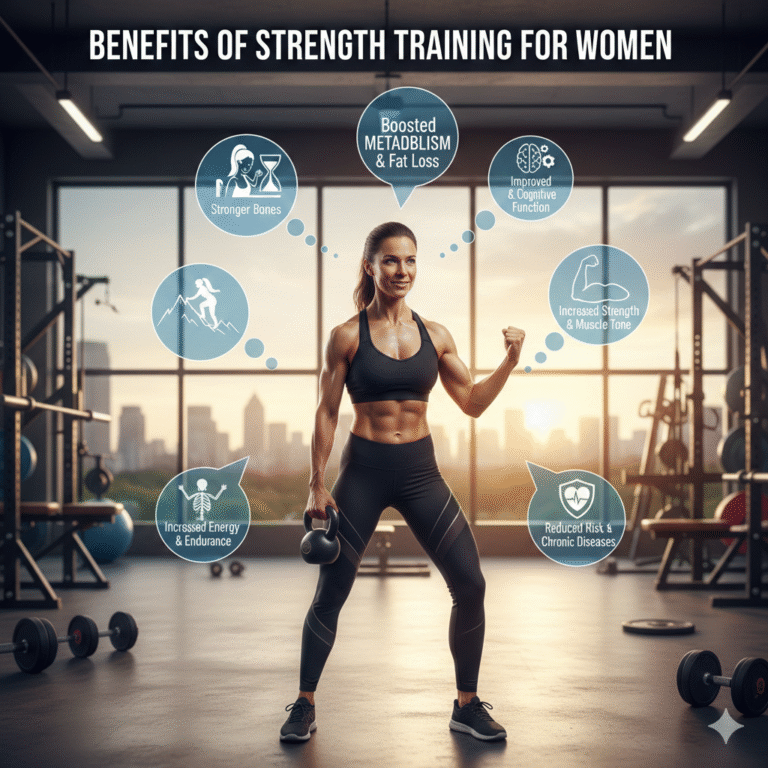
Kettlebell Training for Women 👩
Kettlebell workouts can be an excellent choice for women looking to improve overall fitness.
Potential benefits include:
✔ Increased strength
✔ Better posture
✔ Improved muscular endurance
✔ Enhanced functional fitness
✔ Support for healthy body composition when combined with balanced nutrition
Women do not become overly muscular simply by lifting weights. Strength training helps build lean muscle, which supports metabolism and daily function.
Kettlebell Training for Seniors 👴
With appropriate guidance and medical clearance when needed, kettlebell exercises can be modified for older adults.
Benefits may include:
- Improved balance
- Functional strength
- Better coordination
- Easier performance of daily activities
Choose lighter weights and controlled movements while prioritizing safety.
Nutrition for Kettlebell Training 🥗
Exercise and nutrition work together to support performance and recovery.
Before Training
Choose a light meal containing carbohydrates and protein 1–2 hours before your workout.
Examples:
- Oats with milk
- Banana with peanut butter
- Whole-grain toast with eggs or paneer
After Training
Aim to include:
- Protein for muscle repair
- Carbohydrates to replenish energy
- Plenty of fluids for hydration
Balanced meals throughout the day support consistent progress.
Recovery is Part of Progress 😴
Recovery allows your body to adapt to training.
Recovery Checklist
✅ Sleep 7–9 hours
✅ Stay hydrated
✅ Include mobility exercises
✅ Perform light activity on recovery days
✅ Avoid increasing training volume too quickly
Common Kettlebell Training Mistakes ❌
Avoid these common errors:
❌ Using excessive weight before mastering technique
❌ Swinging with the arms instead of driving with the hips
❌ Rounding the lower back
❌ Holding your breath
❌ Skipping warm-ups
❌ Ignoring recovery
❌ Sacrificing form to complete more repetitions
Consistent, high-quality movement is more valuable than rushing progress.
Kettlebell Training Myths vs Facts
Myth 1
“Kettlebells are only for athletes.”
Fact: They can be adapted for beginners, older adults, and people with different fitness goals.
Myth 2
“You need multiple kettlebells to get results.”
Fact: A single kettlebell can provide dozens of effective exercises for strength and conditioning.
Myth 3
“Kettlebell workouts are only cardio.”
Fact: They can be programmed for strength, power, endurance, mobility, or muscle development depending on the exercise selection and training variables.
Myth 4
“Heavier is always better.”
Fact: Proper technique, control, and gradual progression are more important than lifting the heaviest kettlebell possible.
Why Choose Akhada Gym for Kettlebell Training in Indore? 🏋️
At Akhada Gym, kettlebell training is integrated into structured fitness programs to help members build strength, improve movement quality, and enhance overall fitness.
Our Training Includes
✅ Certified Trainers
✅ Personalized Workout Plans
✅ Functional Strength Training
✅ HIIT & Fat Loss Programs
✅ Strength & Conditioning
✅ Mobility Training
✅ Performance Coaching
✅ Beginner-Friendly Guidance
Whether your goal is weight loss, muscle gain, athletic performance, or simply improving your overall health, our coaches design programs that match your experience and objectives.
Frequently Asked Questions (FAQs)
1. What is Kettlebell Training?
Kettlebell Training is a style of resistance training that uses a kettlebell to improve strength, endurance, mobility, balance, coordination, and cardiovascular fitness through functional movements.
2. Is Kettlebell Training good for beginners?
Yes. Beginners can start with basic exercises such as kettlebell deadlifts, goblet squats, and farmer’s carries while focusing on proper form before progressing to more advanced movements.
3. Can kettlebell workouts help with weight loss?
Kettlebell workouts can support weight loss by increasing physical activity, improving muscular endurance, and contributing to calorie expenditure. For sustainable results, combine them with balanced nutrition and adequate recovery.
4. Can kettlebells build muscle?
Yes. When combined with progressive overload, proper nutrition, and recovery, kettlebell exercises can help build strength and muscle.
5. How many days a week should I do kettlebell training?
Most people benefit from 3–5 sessions per week, depending on their goals, experience, and overall training program.
6. What weight kettlebell should I start with?
Choose a weight that allows you to complete each exercise with good technique while still feeling challenged. Progress gradually rather than choosing the heaviest kettlebell immediately.
7. Are kettlebells better than dumbbells?
Both are effective training tools. Kettlebells are especially useful for dynamic, functional movements, while dumbbells are often preferred for traditional strength and isolation exercises.
8. Can I do kettlebell workouts at home?
Yes. A single kettlebell and a small workout space are enough to perform many effective full-body exercises.
9. Is kettlebell training safe?
When performed with proper technique, appropriate weight selection, and sensible progression, kettlebell training can be a safe and effective form of exercise for many people.
10. What muscles do kettlebell exercises work?
Most kettlebell movements involve multiple muscle groups, including the legs, glutes, core, back, shoulders, chest, and forearms.
11. Can kettlebell training improve posture?
Many kettlebell exercises strengthen the core, upper back, and posterior chain, which can support better posture when combined with good daily movement habits.
12. Do I need a gym for kettlebell training?
No. Many kettlebell workouts can be performed effectively at home with minimal equipment.
Why Choose Akhada Gym for Kettlebell Training in Indore?
At Akhada Gym, we combine kettlebell training with functional fitness, strength training, mobility, and conditioning to help members achieve their individual goals safely and effectively.
Our Features
🏋️ Certified Trainers
💪 Functional Strength Training
🔥 HIIT & Fat Loss Programs
🤸 Mobility Training
🏃 Strength & Conditioning
📈 Personalized Workout Plans
🥗 Nutrition Guidance
😊 Beginner-Friendly Environment
📍 Modern Equipment & Hygienic Facility
Whether your goal is weight loss, muscle gain, improved athletic performance, or overall fitness, our trainers will design a structured kettlebell program tailored to your needs.
Final Conclusion
Kettlebell Training is one of the most versatile and efficient forms of exercise available today. With just one piece of equipment, you can build strength, improve endurance, enhance mobility, increase cardiovascular fitness, and support better movement in daily life.
Success comes from mastering proper technique, progressing gradually, staying consistent, and combining your workouts with balanced nutrition and adequate recovery.
If you’re ready to experience the benefits of expert-guided kettlebell training, visit Akhada Gym and discover how functional fitness can help you move, perform, and feel better every day