How to Build Muscle Naturally: A Complete Guide to Muscle Growth
1. Understand How Muscle Growth Works
Muscle growth, also known as hypertrophy, occurs when muscle fibres adapt to resistance training and gradually increase in size.
When you perform exercises such as squats, bench presses, rows and shoulder presses, your muscles experience mechanical tension. With appropriate nutrition and recovery, your body adapts to this training stimulus.
Three major factors contribute to muscle growth:
- Resistance Training: Provides the stimulus required for muscle development.
- Nutrition: Supplies energy and nutrients for muscle repair and growth.
- Recovery: Allows your body to adapt to training.
All three are equally important. Training hard without eating properly or recovering sufficiently can limit your results.
2. Follow a Structured Strength Training Programme
Strength training is the foundation of natural muscle building.
Your workout programme should target all major muscle groups and gradually challenge your muscles over time.
Best Compound Exercises for Muscle Growth
Compound exercises involve multiple joints and muscle groups. They are highly useful for developing overall strength and muscle mass.
1. Squats
- Target muscles: Quadriceps, glutes and core.
- Recommended sets: 3–4
- Repetitions: 6–12
2. Bench Press
- Target muscles: Chest, shoulders and triceps.
- Recommended sets: 3–4
- Repetitions: 6–12
3. Deadlifts
- Target muscles: Posterior chain, including glutes, hamstrings and back.
- Recommended sets: 2–3
- Repetitions: 5–8
4. Lat Pulldowns
- Target muscles: Latissimus dorsi and upper back.
- Recommended sets: 3
- Repetitions: 8–12
5. Overhead Shoulder Press
- Target muscles: Shoulders and triceps.
- Recommended sets: 3
- Repetitions: 8–12
Choose exercises according to your experience, mobility and fitness level. Correct technique should always come before heavier weights.
3. Apply Progressive Overload
Progressive overload is one of the most important principles of muscle building.
It means gradually increasing the training demands placed on your muscles as your strength improves.
You can achieve progressive overload by:
- Increasing the weight lifted.
- Performing more repetitions.
- Adding an appropriate set.
- Improving exercise technique.
- Increasing your range of motion.
- Performing the same workload with better control.
Example:
| Week | Weight | Repetitions |
|---|---|---|
| Week 1 | 20 kg | 8 |
| Week 2 | 20 kg | 10 |
| Week 3 | 20 kg | 12 |
| Week 4 | 22.5 kg | 8 |
This is an example of gradual progression, not a mandatory weekly increase. Increase the load only when you can complete your target repetitions with good technique.
4. Eat Enough Protein Every Day
Protein is essential for muscle repair and development. It provides amino acids that your body uses to build and maintain muscle tissue.
For people who regularly perform resistance training, approximately 1.6–2.2 grams of protein per kilogram of body weight per day is a useful target range.
Best Natural Protein Sources
Vegetarian sources:
- Paneer
- Milk and curd
- Tofu
- Soybeans
- Dal and lentils
- Chickpeas and kidney beans
- Whey protein, if desired
Non-vegetarian sources:
- Eggs
- Chicken
- Fish
- Lean meat
- Milk and dairy products
Try to distribute your protein intake across your meals rather than consuming most of it in a single sitting.
5. Maintain the Right Calorie Intake
Muscle growth requires sufficient energy.
If your goal is to gain muscle, consistently eating too few calories may make it difficult to support muscle development.
A small calorie surplus is often a practical approach for people prioritising muscle gain.
What Should You Eat?
Your diet should contain three major macronutrients:
| Nutrient | Main Function | Food Sources |
|---|---|---|
| Protein | Muscle repair and growth | Paneer, eggs, tofu, dal |
| Carbohydrates | Energy for training | Rice, oats, roti, potatoes |
| Healthy Fats | Hormonal and cellular functions | Nuts, seeds, olive oil |
Focus on nutritious meals and adjust your portions according to your weight trend, training performance and goals.
Avoid unnecessary overeating. A large calorie surplus can lead to excessive fat gain without proportionately faster muscle development.
6. Follow a Consistent Workout Split
A structured workout split helps distribute training volume across the week.
Here is an example of a six-day Push-Pull-Legs programme for intermediate gym-goers.
Day 1 – Push (Chest, Shoulders and Triceps)
| Exercise | Sets | Reps |
|---|---|---|
| Barbell Bench Press | 3 | 6–10 |
| Incline Dumbbell Press | 3 | 8–12 |
| Seated Shoulder Press | 3 | 8–12 |
| Lateral Raises | 3 | 12–15 |
| Triceps Pushdown | 3 | 10–15 |
Day 2 – Pull (Back and Biceps)
| Exercise | Sets | Reps |
|---|---|---|
| Lat Pulldown | 3 | 8–12 |
| Barbell Row | 3 | 8–10 |
| Seated Cable Row | 3 | 10–12 |
| Face Pull | 2 | 12–15 |
| Dumbbell Biceps Curl | 3 | 10–12 |
Day 3 – Legs
| Exercise | Sets | Reps |
|---|---|---|
| Squats | 3 | 6–10 |
| Leg Press | 3 | 10–12 |
| Romanian Deadlift | 3 | 8–12 |
| Leg Curl | 3 | 10–15 |
| Calf Raises | 3 | 12–15 |
Day 4 – Push
Repeat the push pattern with suitable exercise variations, such as dumbbell bench press and machine shoulder press.
Day 5 – Pull
Include suitable variations such as chest-supported rows, neutral-grip pulldowns and hammer curls.
Day 6 – Legs
Use appropriate squat or leg press variations, lunges, hamstring exercises and calf training.
Day 7 – Recovery
Take a rest day or perform light walking and mobility work.
Adjust training volume to your experience and recovery capacity. Beginners may achieve excellent results with three full-body sessions per week instead of six training days.
7. Prioritise Sleep and Recovery
Muscle growth requires more than intense workouts. Your body needs adequate recovery to adapt to resistance training.
Poor recovery can affect strength, workout performance and consistency.
Recovery Tips
- Aim for 7–9 hours of sleep.
- Allow sufficient recovery between demanding sessions.
- Avoid training the same muscles intensely without adequate recovery.
- Maintain hydration.
- Include rest days in your programme.
- Reduce training volume temporarily if fatigue accumulates.
Remember, recovery is a part of muscle building, not time wasted away from the gym.
8. Do Not Ignore Carbohydrates
Carbohydrates are an important source of energy during resistance training.
If you unnecessarily restrict carbohydrates, you may find it harder to maintain workout intensity and training volume.
Healthy Carbohydrate Sources
- Rice
- Oats
- Whole wheat roti
- Sweet potatoes
- Bananas
- Fruits
- Whole grains
Combine carbohydrates with protein to create balanced meals that support training and recovery.
9. Track Your Muscle Growth Progress
You cannot improve what you do not monitor.
Tracking your progress helps you understand whether your workout and nutrition programme are working.
Monitor these factors:
- Body Weight: Check under consistent conditions and follow weekly averages.
- Strength: Record weights, sets and repetitions.
- Body Measurements: Monitor chest, arms, waist and thighs.
- Progress Photographs: Compare photographs every 3–4 weeks.
- Workout Consistency: Record how regularly you follow your programme.
Remember, body weight alone does not tell you how much muscle you have gained.
10. Avoid These Common Muscle-Building Mistakes
Even regular gym-goers make mistakes that can slow muscle development.
- Skipping Meals: Makes it harder to consume sufficient calories and protein.
- Ignoring Progressive Overload: Limits the training stimulus over time.
- Changing Exercises Too Frequently: Makes progress difficult to measure.
- Training Without Recovery: Can lead to accumulated fatigue.
- Using Incorrect Technique: Reduces exercise quality and may increase injury risk.
- Following Extreme Diets: Can compromise energy and nutritional intake.
- Expecting Quick Results: Muscle development takes consistent effort over time.
Focus on building habits that you can maintain for months and years.
11. Are Supplements Necessary for Natural Muscle Growth?
No. Supplements are not compulsory for building muscle naturally.
A balanced diet that provides adequate calories, protein, vitamins and minerals can support muscle development.
Some people choose supplements for convenience, but they should not replace proper nutrition and training.
Examples include:
- Whey Protein: A convenient way to meet daily protein requirements.
- Creatine Monohydrate: A well-researched supplement that can support strength and high-intensity exercise performance.
- Vitamin B12: Important for people whose diets do not provide adequate B12.
- Vitamin D: Supplementation may be appropriate when intake or levels are insufficient.
Choose supplements based on individual needs and professional guidance where appropriate. Avoid unverified muscle-building products, steroids and hormonal shortcuts.
12. How Long Does It Take to Build Muscle Naturally?
Muscle growth is a gradual process, and results differ from person to person.
Factors that influence muscle development include:
- Training experience.
- Genetics.
- Age.
- Nutrition.
- Sleep and recovery.
- Workout consistency.
- Overall health.
Beginners may notice improvements in strength and muscle size relatively quickly, while experienced trainees generally progress more slowly.
Instead of expecting dramatic changes within a few weeks, focus on consistent training and measurable improvements over several months.
Start Your Natural Muscle-Building Journey at Akhada – The Right Track Gym
Building muscle naturally requires the right combination of resistance training, nutrition, recovery and consistency.
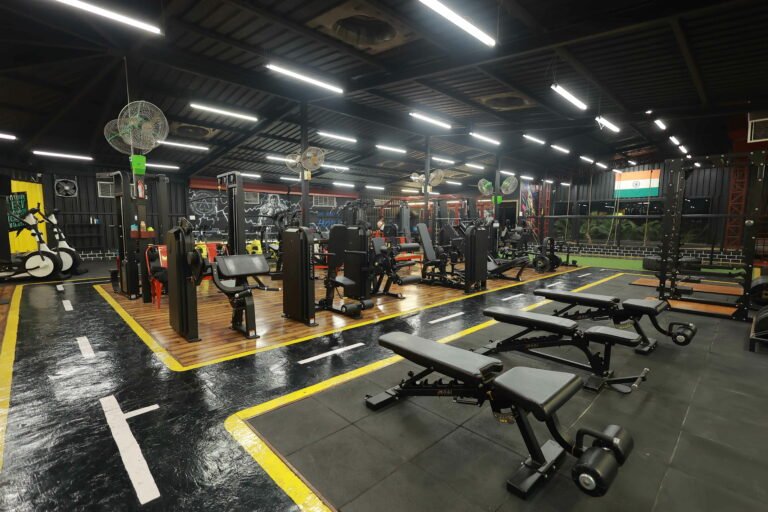
At Akhada – The Right Track Gym, Indore, you can work towards your fitness goals through structured strength training, functional workouts, cardio and personal training guidance.
Whether you are a beginner or an experienced gym-goer, following a suitable workout programme can help you develop strength, improve fitness and work towards a stronger physique.
Visit Us: 3rd Floor, Press Complex, LIG Circle, AB Road, Near Dainik Bhaskar, Indore, Madhya Pradesh – 452011.
Call: +91 9111100683
Build naturally. Train consistently. Get stronger every day!
Frequently Asked Questions (FAQs)
1. Can I build muscle naturally without supplements?
Yes. Supplements are not necessary for muscle growth. You can build muscle through resistance training, adequate protein, sufficient calories and proper recovery.
2. How much protein do I need to build muscle?
For most people performing regular resistance training, approximately 1.6–2.2 grams of protein per kilogram of body weight per day is a useful target.
3. Can vegetarians build muscle naturally?
Absolutely. Paneer, tofu, soybeans, lentils, milk, curd and other protein-rich foods can help vegetarians meet their daily protein requirements.
4. How many days should I work out to build muscle?
Three to six training days per week can work, depending on your experience, programme and recovery. Beginners can start with three well-structured sessions.
5. Is cardio bad for muscle growth?
No. Moderate cardio supports cardiovascular health and overall fitness. However, excessive cardio combined with inadequate nutrition and recovery may interfere with muscle-gain goals.
6. Can I build muscle and lose fat at the same time?
Yes. This is known as body recomposition. It can be achievable, particularly for beginners and people returning to training, with appropriate resistance training and nutrition.
7. What is the most important factor for natural muscle growth?
There is no single factor. Consistent resistance training, progressive overload, adequate nutrition and proper recovery work together to support muscle development.