Mobility Training: Why Better Movement is the Foundation of Better Fitness 🤸♂️
Do you feel stiff when you wake up? Do your hips feel tight after sitting for long hours? Do your shoulders hurt while lifting weights or reaching overhead?
If yes, you’re not alone.
Many people spend hours sitting at desks, driving, or using mobile phones, which gradually reduces joint movement and muscle flexibility. Over time, this can affect posture, workout performance, and even everyday activities like bending, walking, or climbing stairs.
This is where Mobility Training becomes essential.
Mobility training is not just for athletes or yoga practitioners—it is beneficial for everyone. Whether you’re a beginner, an office worker, a senior citizen, or someone who trains regularly at the gym, improving mobility can help you move with greater ease, improve exercise technique, and support long-term physical health.
If you’re searching for Mobility Training in Indore, this complete guide explains everything you need to know, from the science behind mobility to practical routines you can start today.
Table of Contents
- What is Mobility Training?
- Mobility vs Flexibility vs Stretching
- Why Mobility Matters
- The Science Behind Mobility
- Benefits of Mobility Training
- Signs You Need Mobility Training
- Common Causes of Poor Mobility
- Best Mobility Exercises
- Full-Body Mobility Routine
- Mobility for Weight Training
- Mobility for Athletes
- Mobility for Office Workers
- Beginner Mobility Program
- Advanced Mobility Program
- Nutrition & Recovery
- Common Mistakes
- FAQs
- Why Choose Akhada Gym?
- Yoast SEO Details
What is Mobility Training? 🤸
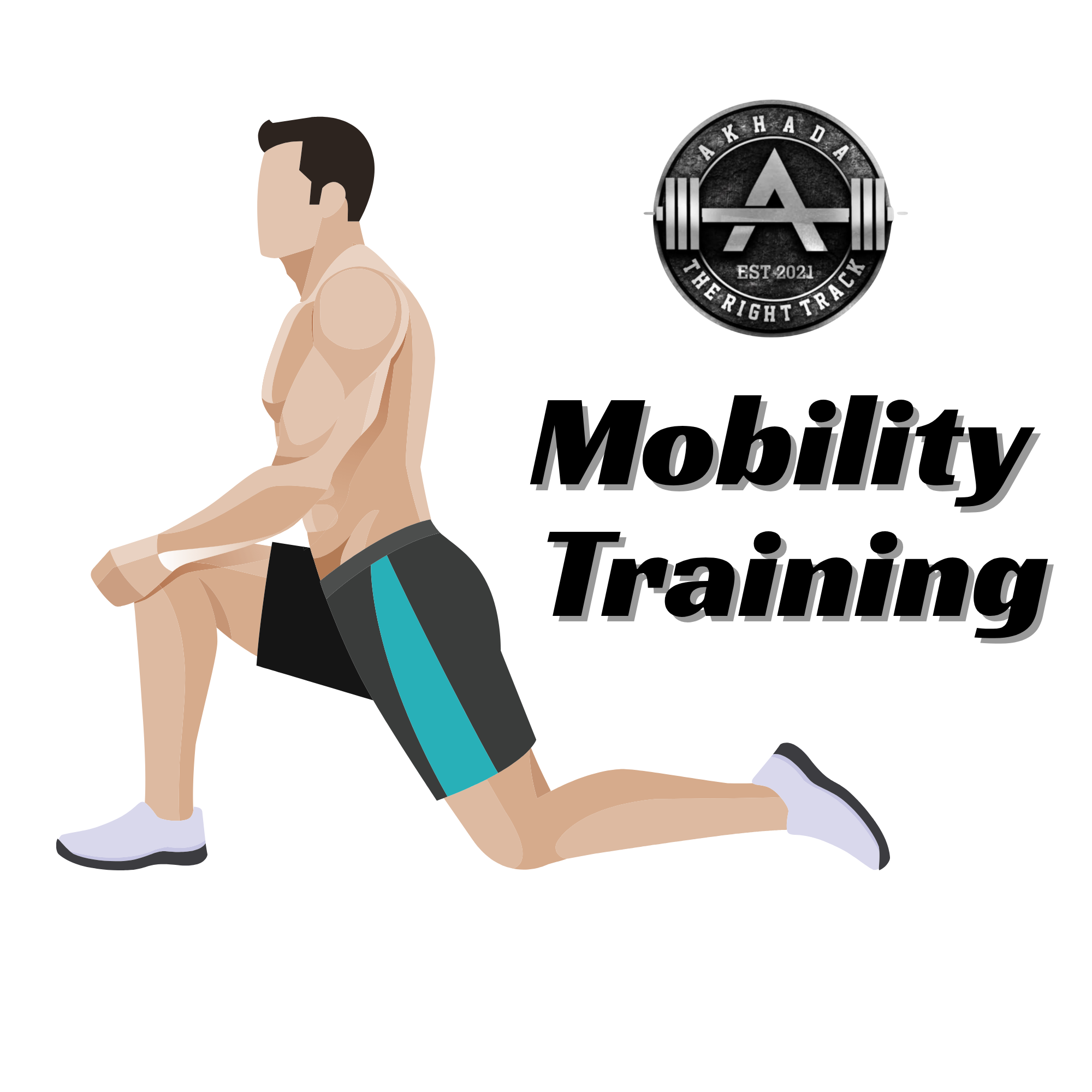
Mobility Training is a form of exercise that improves your ability to move a joint through its full, controlled range of motion.
Unlike simple stretching, mobility training combines:
✅ Joint movement
✅ Muscle control
✅ Stability
✅ Balance
✅ Coordination
This means you’re not just becoming more flexible—you are becoming stronger and more efficient within that range of motion.
Good mobility allows you to squat deeper, lift safely, run comfortably, reach overhead without pain, and perform daily tasks more efficiently.
Mobility vs Flexibility vs Stretching
Many people use these terms interchangeably, but they have different meanings.
| Mobility | Flexibility | Stretching |
|---|---|---|
| Active control of movement | Muscle length | Technique used to improve movement |
| Includes strength and stability | Focuses on muscles | Can be static or dynamic |
| Supports better movement | Supports range of motion | One tool within a mobility program |
Think of flexibility as having the range, while mobility is having the strength and control to use that range effectively.
Why Mobility Matters
Your joints are designed to move. When they don’t move regularly through their full range, stiffness and movement restrictions can develop over time.
Poor mobility may contribute to:
❌ Reduced exercise performance
❌ Poor lifting technique
❌ Difficulty with daily activities
❌ Muscle tightness
❌ Reduced movement efficiency
A consistent mobility routine can help maintain healthy movement patterns and make other forms of exercise more effective.
The Science Behind Mobility 🧠
Mobility depends on several factors working together:
Joint Health
Healthy joints move smoothly through their available range.
Muscle Length
Tight muscles can limit movement if they are not regularly challenged through appropriate ranges.
Strength
Mobility requires strength to control movement—not just passive flexibility.
Nervous System
Your nervous system helps coordinate movement and influences how comfortably your body moves through different positions.
Movement Practice
Regular practice of quality movement helps maintain mobility over time.
15 Benefits of Mobility Training
1. Improves Joint Movement
Supports smoother movement in the hips, shoulders, ankles, spine, and other joints.
2. Enhances Exercise Technique
Better mobility can make exercises like squats, lunges, presses, and deadlifts feel more comfortable and technically sound.
3. Supports Better Posture
Mobility exercises for the chest, shoulders, hips, and spine can help counteract the effects of prolonged sitting.
4. Helps Reduce Stiffness
Gentle movement throughout the day can ease the feeling of tight muscles and joints.
5. Improves Athletic Performance
Athletes often include mobility work to support efficient movement and sport-specific performance.
6. Builds Better Balance
Mobility training often incorporates stability exercises that improve body control.
7. Supports Functional Movement
Everyday actions such as bending, reaching, lifting, and climbing stairs become easier with better mobility.
8. Improves Workout Quality
Moving through a fuller, controlled range can enhance the effectiveness of many strength exercises.
9. Encourages Better Movement Awareness
Mobility routines help you become more aware of how your body moves.
10. Supports Healthy Aging
Maintaining mobility can help preserve independence and ease of movement as you grow older.
11. Helps You Warm Up Effectively
Dynamic mobility drills prepare your body for exercise more effectively than remaining completely inactive before a workout.
12. Increases Confidence During Movement
Feeling more stable and capable can improve confidence in both workouts and daily life.
13. Complements Strength Training
Strength and mobility work together. Better mobility allows you to train with improved technique, while strength helps you control your range of motion.
14. Suitable for All Fitness Levels
From beginners to experienced athletes, mobility exercises can be adapted to individual needs.
15. Promotes Long-Term Physical Health
Consistent mobility practice supports an active lifestyle and helps maintain movement quality over time.
Signs You May Benefit from Mobility Training
You may need more mobility work if you notice:
- Difficulty squatting deeply
- Tight hips after sitting
- Limited shoulder movement overhead
- Stiff ankles while walking or exercising
- Rounded posture from desk work
- Feeling restricted during workouts
Improving mobility is often a gradual process, and consistent practice typically produces the best results.
Common Causes of Poor Mobility
- Long hours of sitting
- Lack of regular exercise
- Repetitive movement patterns
- Limited warm-ups before workouts
- Inadequate recovery
- Aging-related changes in activity levels
- Previous injuries (after appropriate medical clearance)
The good news is that many of these factors can be improved through regular movement, strength training, and structured mobility exercises.
Best Mobility Exercises to Improve Movement, Flexibility & Joint Health 🤸♂️
A well-designed Mobility Training routine targets the joints that are most commonly affected by modern lifestyles and gym training. Long hours of sitting, repetitive movements, and poor posture can reduce your range of motion over time.
The following exercises help improve movement quality, prepare your body for workouts, and support better performance in everyday activities.
Hip Mobility Training
The hips are one of the most important joints in the body. Healthy hip mobility supports walking, running, squatting, climbing stairs, and lifting safely.
Benefits of Hip Mobility
✅ Better squat depth
✅ Improved walking and running mechanics
✅ Reduced stiffness after sitting
✅ Improved lower-body movement
1. World’s Greatest Stretch
This dynamic movement combines a lunge, spinal rotation, and hamstring stretch.
How to Perform
- Step into a deep lunge.
- Place both hands on the floor.
- Rotate your upper body toward the front leg.
- Return slowly and repeat.
Recommended: 8–10 repetitions per side.
2. 90/90 Hip Rotation
This exercise improves internal and external hip rotation.
Benefits
- Better hip mobility
- Improved lower-body control
- Supports squats and lunges
Recommended: 10 repetitions per side.
3. Deep Squat Hold
Sit into a comfortable deep squat while keeping your heels on the floor if possible.
Benefits
- Improves ankle and hip mobility
- Encourages better posture
- Helps prepare for lower-body training
Hold for 20–30 seconds while breathing steadily.
4. Walking Lunges with Rotation
This movement combines hip mobility with thoracic spine rotation.
Benefits
✔ Hip flexibility
✔ Core activation
✔ Better balance
Shoulder Mobility Training
Shoulders are involved in nearly every upper-body movement. Poor shoulder mobility can make pressing, reaching, and pulling movements more difficult.
Benefits of Shoulder Mobility
✅ Improved overhead movement
✅ Better lifting technique
✅ Healthier posture
1. Arm Circles
A simple dynamic warm-up.
- Forward circles × 20
- Backward circles × 20
This increases blood flow and prepares the shoulders for activity.
2. Wall Slides
Stand with your back against a wall and slowly slide your arms upward while maintaining contact.
Benefits
- Encourages healthy shoulder movement
- Improves posture
- Activates the upper back
Perform 10–15 repetitions.
3. Band Pull-Aparts
Using a light resistance band:
- Hold the band at shoulder height.
- Pull it apart while keeping your arms straight.
- Return with control.
Benefits
✔ Strengthens upper back muscles
✔ Supports shoulder stability
✔ Helps counter rounded shoulders
4. Shoulder Pass-Throughs
Using a resistance band or PVC pipe:
- Hold with a wide grip.
- Raise it overhead.
- Continue behind your body as comfortably as possible.
- Reverse the movement.
Move slowly and stay within a comfortable range.
Thoracic Spine Mobility
The thoracic spine (upper and mid-back) plays a key role in posture and overhead movement.
Limited thoracic mobility can affect lifting technique and everyday movement.
1. Cat-Cow Stretch
Move slowly between arching and rounding your back.
Benefits
- Improves spinal movement
- Warms up the back
- Encourages controlled mobility
Repeat for 10–15 repetitions.
2. Thread the Needle
From an all-fours position:
- Slide one arm under the opposite arm.
- Rotate your upper body.
- Return slowly.
Benefits
✔ Thoracic rotation
✔ Shoulder mobility
✔ Upper-back flexibility
Perform 8–10 repetitions per side.
3. Open Book Stretch
Lie on your side with knees bent.
Rotate your top arm across your body while keeping your knees together.
This movement encourages gentle thoracic rotation.
Hold for 2–3 seconds before returning.
4. Foam Roller Thoracic Extension
Place a foam roller across your upper back.
Support your head with your hands and gently extend backward over the roller.
Benefits
- Improves upper-back extension
- Supports overhead movements
- Reduces feelings of stiffness
Ankle Mobility Training
Good ankle mobility is essential for walking, running, squatting, jumping, and maintaining balance.
Limited ankle movement often affects squat depth and lower-body mechanics.
Benefits
✅ Better squat technique
✅ Improved balance
✅ Smoother walking and running
1. Knee-to-Wall Drill
Stand facing a wall.
Move one knee toward the wall while keeping your heel on the floor.
This helps improve ankle dorsiflexion.
Perform 10–15 repetitions per side.
2. Heel-to-Toe Rock
Shift your weight from your heels to your toes in a slow, controlled manner.
Benefits
- Improves ankle control
- Enhances balance
- Prepares the lower body for activity
3. Ankle Circles
Lift one foot slightly off the ground.
Rotate your ankle slowly in both directions.
Repeat 10 circles clockwise and 10 circles counterclockwise.
4. Standing Calf Stretch
Place your hands against a wall.
Step one leg back and gently press the heel toward the floor.
Hold for 20–30 seconds.
Repeat on both sides.
Dynamic Mobility Warm-Up Before Every Workout 🔥
A proper warm-up prepares your joints and muscles for exercise.
Try this 8–10 minute routine before strength or cardio sessions:
- Arm Circles – 20 repetitions each direction
- World’s Greatest Stretch – 8 reps per side
- Walking Lunges – 10 reps per leg
- Cat-Cow Stretch – 10 reps
- Knee-to-Wall Drill – 10 reps per side
- Bodyweight Squats – 15 reps
- Band Pull-Aparts – 15 reps
- Hip Rotations – 10 reps per side
This routine increases blood flow, activates major muscle groups, and improves movement quality before training.
Tips for Safe Mobility Training
✔ Move with control rather than speed.
✔ Stay within a comfortable, pain-free range of motion.
✔ Breathe naturally throughout each exercise.
✔ Perform mobility exercises consistently for the best results.
✔ Combine mobility work with strength training to help maintain and use your improved range of motion effectively.
Regular mobility practice doesn’t require hours in the gym. Even 10–15 minutes a day can make a noticeable difference in how you move and feel over time.
Mobility Training – Part 2B
Wrist Mobility Training ✋
Healthy wrists are essential for everyday activities and exercises like push-ups, planks, bench press, overhead press, and pull-ups. Limited wrist mobility can make these movements uncomfortable and reduce performance.
Benefits of Wrist Mobility
✅ Better grip strength
✅ Improved lifting comfort
✅ Enhanced push-up and plank performance
1. Wrist Circles
Rotate your wrists slowly in both directions.
Recommended: 15–20 circles clockwise and counterclockwise.
2. Wrist Flexor Stretch
Extend one arm in front of you with the palm facing upward.
Gently pull your fingers downward using the opposite hand until you feel a comfortable stretch.
Hold for 20–30 seconds.
Repeat on both sides.
3. Wrist Extensor Stretch
Extend your arm with the palm facing downward.
Use the opposite hand to gently pull your fingers toward your body.
Hold for 20–30 seconds.
4. Palm Rocking
Start on your hands and knees.
Shift your body weight gently forward and backward while keeping your palms on the floor.
This movement prepares the wrists for weight-bearing exercises.
Knee Mobility Training 🦵
Healthy knees depend on good mobility in the hips and ankles as well as balanced leg strength.
Benefits
✔ Better squat mechanics
✔ Improved walking and climbing
✔ Increased lower-body stability
1. Terminal Knee Extensions (Band Assisted)
Using a light resistance band:
- Bend and straighten the knee slowly.
- Focus on controlled movement.
Recommended: 12–15 repetitions.
2. Assisted Deep Squat Hold
Hold onto a stable support and lower into a deep squat within your comfortable range.
Benefits include improved hip, knee, and ankle coordination.
Hold for 20–30 seconds.
3. Step-Up Control
Step onto a low platform and lower yourself slowly.
This exercise improves movement quality and control around the knee.
Neck Mobility Training
Many office workers experience stiffness due to prolonged computer and mobile phone use.
1. Chin Tucks
Pull your chin gently backward while keeping your head level.
Hold for 5 seconds.
Repeat 10–15 times.
2. Neck Rotations
Turn your head slowly to the left and right.
Avoid forcing the movement.
Repeat 10 times per side.
3. Side Neck Stretch
Tilt your head toward one shoulder until you feel a gentle stretch.
Hold for 20 seconds on each side.
Full-Body Mobility Workout 🔥
Perform this routine 3–4 times per week.
Exercise 1
World’s Greatest Stretch
8 repetitions per side
Exercise 2
90/90 Hip Rotation
10 repetitions per side
Exercise 3
Cat-Cow Stretch
15 repetitions
Exercise 4
Thread the Needle
10 repetitions per side
Exercise 5
Wall Slides
15 repetitions
Exercise 6
Band Pull-Aparts
15 repetitions
Exercise 7
Knee-to-Wall Drill
12 repetitions per side
Exercise 8
Deep Squat Hold
30 seconds
Exercise 9
Wrist Mobility Flow
1 minute
Exercise 10
Neck Mobility Sequence
2 minutes
Complete 2–3 rounds depending on your fitness level.
15-Minute Daily Mobility Routine ⏱️
If you’re short on time, this routine can be completed almost anywhere.
Minute 1–2
Arm Circles
Minute 3–4
Hip Rotations
Minute 5–6
World’s Greatest Stretch
Minute 7–8
Cat-Cow Stretch
Minute 9–10
Thread the Needle
Minute 11–12
Ankle Mobility Drill
Minute 13–14
Deep Squat Hold
Minute 15
Breathing and Gentle Full-Body Stretch
Practicing this routine consistently can help maintain joint movement and prepare your body for daily activities or workouts.
Best Equipment for Mobility Training
You don’t need expensive equipment to improve mobility, but a few simple tools can make your routine more effective.
Resistance Bands
Useful for shoulder mobility, activation drills, and assisted stretches.
Foam Roller
Helps prepare muscles before training and can be included in recovery routines.
Massage Ball
Useful for targeting smaller muscle groups such as the feet, shoulders, and hips.
Yoga Mat
Provides a comfortable surface for floor-based exercises.
PVC Pipe or Dowel
Helpful for shoulder mobility exercises like pass-throughs.
Mobility Stick
Can assist with controlled mobility drills and stretching.
Mobility Before vs After Workouts
Before Training
Focus on dynamic mobility exercises that prepare your body for movement.
Examples:
- Arm Circles
- Hip Rotations
- Walking Lunges
- Bodyweight Squats
After Training
Use gentle stretching and slower mobility work to help your body cool down and maintain flexibility.
Examples:
- Hip Stretch
- Hamstring Stretch
- Chest Stretch
- Calf Stretch
Weekly Mobility Schedule
Monday
Hip + Ankle Mobility
Tuesday
Shoulder + Thoracic Spine
Wednesday
Full-Body Mobility
Thursday
Hip + Core Control
Friday
Shoulders + Wrists
Saturday
Recovery Mobility Flow
Sunday
Gentle Stretching and Relaxation
This schedule complements strength training, cardio, and sports practice without adding excessive fatigue.
Tips to Improve Mobility Faster
✔ Perform mobility exercises consistently rather than occasionally.
✔ Move slowly and with control instead of rushing through repetitions.
✔ Pair mobility work with strength training to improve control throughout your available range of motion.
✔ Warm up before workouts and cool down afterward.
✔ Stay physically active throughout the day—frequent movement helps counter the effects of prolonged sitting.
✔ Listen to your body and avoid forcing painful positions. Progress is gradual and should remain comfortable.
With regular practice, improved mobility can make daily activities easier, enhance exercise technique, and support long-term physical health.
Beginner Mobility Training Program 🌱
If you’re new to mobility training, start with simple movements that improve joint control and movement quality. The goal is consistency, not intensity.
Weekly Beginner Plan
Monday – Full Body Mobility (20 Minutes)
- Arm Circles – 20 reps
- World’s Greatest Stretch – 8 reps each side
- Cat-Cow Stretch – 15 reps
- Hip Rotations – 10 reps each side
- Deep Squat Hold – 30 seconds
- Ankle Mobility Drill – 10 reps each side
Wednesday – Hip & Shoulder Mobility
- 90/90 Hip Rotation
- Walking Lunges
- Wall Slides
- Band Pull-Aparts
- Thread the Needle
Perform 2–3 sets of each movement with controlled breathing.
Friday – Recovery Mobility Flow
- Foam Rolling (5 Minutes)
- Full Body Dynamic Stretching
- Neck Mobility
- Wrist Mobility
- Deep Breathing
A beginner should focus on improving movement quality before increasing the duration or complexity of the routine.
Intermediate Mobility Program 💪
Once you have built a foundation, you can increase training frequency.
Weekly Schedule
Monday: Hip & Ankle Mobility
Tuesday: Shoulder & Thoracic Spine
Wednesday: Full Body Mobility
Thursday: Recovery & Stretching
Friday: Functional Mobility Flow
Saturday: Mobility + Core Stability
Sunday: Active Recovery
Each session should last approximately 25–35 minutes and can be combined with strength training.
Advanced Mobility Training 🏆
Advanced mobility routines are ideal for athletes and experienced gym members.
Include:
- Cossack Squats
- Turkish Get-Ups
- Jefferson Curls (performed with proper coaching)
- Deep Squat Mobility Flows
- Single-Leg Romanian Deadlift Mobility
- Advanced Hip Rotations
- Controlled Articular Rotations (CARs)
These exercises require good movement control and should be performed with proper technique.
Mobility Training for Weight Loss 🔥
Although mobility exercises are not designed primarily to burn large numbers of calories, they can play an important role in a weight-loss program.
Better mobility helps you:
✔ Perform strength exercises with improved technique.
✔ Move through a greater range of motion.
✔ Prepare your body for higher-quality workouts.
✔ Recover more effectively between training sessions.
Pair mobility work with resistance training, cardio, and balanced nutrition for the best overall results.
Mobility Training for Muscle Gain 💪
Good mobility allows muscles to work through a full, controlled range of motion.
This may help improve exercise quality in movements such as:
- Squats
- Deadlifts
- Bench Press
- Overhead Press
- Pull-Ups
- Lunges
Many experienced lifters include dedicated mobility sessions to support long-term strength training.
Mobility Training for Athletes 🏅
Athletes depend on efficient movement.
Mobility training can support:
⚡ Sprint mechanics
🏃 Running efficiency
🏸 Agility
🏀 Jumping
⚽ Direction changes
🏋️ Lifting technique
Whether you play cricket, football, badminton, basketball, or another sport, mobility work can complement sport-specific training.
Mobility Training for Office Workers 💼
Sitting for long periods can contribute to stiffness in the hips, chest, shoulders, and upper back.
A short daily mobility routine may help you feel more comfortable during the workday.
Suggested Daily Routine (10 Minutes)
- Neck Mobility
- Shoulder Rolls
- Wall Slides
- Hip Flexor Stretch
- Cat-Cow Stretch
- Thoracic Rotation
- Deep Breathing
Taking brief movement breaks throughout the day is also beneficial.
Mobility Training for Older Adults 👴
Maintaining mobility becomes increasingly important with age.
Appropriately modified mobility exercises can help support:
✔ Comfortable walking
✔ Balance
✔ Confidence during movement
✔ Joint function
Exercises should be adapted to the individual’s fitness level and, where needed, performed under professional guidance.
Recovery & Injury Prevention 😴
Recovery is an essential part of any mobility or fitness program.
Support recovery with:
✅ 7–9 hours of quality sleep
✅ Regular hydration
✅ Balanced nutrition
✅ Light movement on recovery days
✅ Gradual training progression
If you experience persistent pain or have an existing injury, consult a qualified healthcare professional before starting a new exercise program.
Common Mobility Training Mistakes ❌
Avoid these mistakes:
❌ Skipping warm-ups
❌ Forcing painful ranges of motion
❌ Moving too quickly
❌ Holding your breath during exercises
❌ Performing mobility work inconsistently
❌ Ignoring strength training
Mobility and strength work together. Improving one while neglecting the other can limit overall progress.
Mobility Training Myths vs Facts
Myth 1: Mobility and stretching are the same.
Fact: Stretching focuses mainly on muscle length, while mobility includes strength, stability, coordination, and controlled movement through a joint’s available range.
Myth 2: Only athletes need mobility training.
Fact: Office workers, beginners, older adults, and anyone who wants to move comfortably can benefit from mobility exercises.
Myth 3: Mobility replaces strength training.
Fact: Mobility and strength complement each other. Strong muscles help you control the range of motion that mobility training develops.
Myth 4: More mobility work always leads to faster results.
Fact: Consistency, proper technique, and gradual progression are more important than excessive training volume.
Why Choose Akhada Gym for Mobility Training in Indore? 🏋️
At Akhada Gym, we understand that good movement is the foundation of long-term fitness.
Our mobility-focused coaching is integrated into personalized training plans to help members move confidently and train more effectively.
What We Offer
✅ Mobility Assessments
✅ Customized Mobility Programs
✅ Functional Strength Training
✅ Strength & Conditioning
✅ HIIT Workouts
✅ Weight Loss Programs
✅ Muscle Gain Programs
✅ Certified Trainers
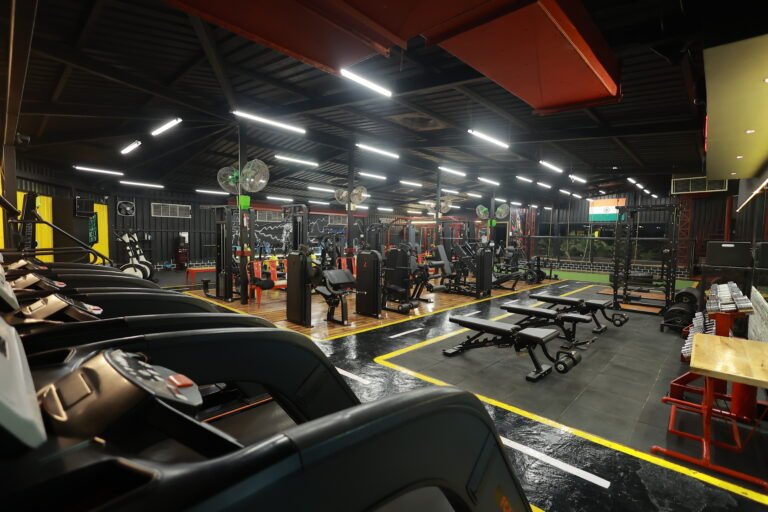
✅ Modern Equipment
✅ Friendly & Hygienic Environment
Whether you’re starting your fitness journey, returning after a break, or preparing for sports performance, our trainers create mobility routines that match your goals and experience.
Frequently Asked Questions (FAQs)
1. What is Mobility Training?
Mobility Training is a form of exercise that helps improve the way your joints move through their full range of motion while maintaining strength, control, and stability. It supports better movement in daily life and during workouts.
2. Is Mobility Training the same as stretching?
No. Stretching mainly focuses on improving muscle flexibility, while mobility training combines flexibility with strength, stability, coordination, and controlled movement.
3. How often should I do mobility exercises?
Most people benefit from 10–20 minutes of mobility work daily or at least 3–5 sessions per week, depending on their activity level and goals.
4. Can Mobility Training help reduce stiffness?
Yes. Regular mobility exercises can help improve joint movement and reduce feelings of stiffness, especially after long periods of sitting or inactivity.
5. Should I do mobility before or after workouts?
Dynamic mobility exercises are generally suitable before workouts to prepare the body for movement, while slower mobility work and stretching can be included after training as part of a cool-down.
6. Is Mobility Training good for weight loss?
Mobility exercises alone are not a high-calorie-burning activity, but they support better movement quality, improve workout performance, and complement a balanced weight-loss program.
7. Can beginners start Mobility Training?
Absolutely. Beginner-friendly mobility routines are suitable for most people and can be adapted to individual fitness levels.
8. What equipment do I need?
Most mobility exercises require no equipment. Optional tools include:
- Resistance Bands
- Foam Rollers
- Massage Balls
- Yoga Mats
- PVC Pipes
- Mobility Sticks
9. Can Mobility Training improve gym performance?
Yes. Better mobility can help improve technique in exercises such as squats, deadlifts, lunges, and overhead presses by allowing smoother, more controlled movement.
10. Is Mobility Training useful for older adults?
Yes. Age-appropriate mobility exercises can help maintain movement quality, balance, and confidence during daily activities.
Why Choose Akhada Gym for Mobility Training? 💪
At Akhada Gym, we believe movement quality is just as important as strength.
Our certified trainers assess your movement patterns and create customized mobility programs that complement your fitness goals.
What You’ll Get
🏋️ Personalized Mobility Assessment
🤸 Functional Movement Training
💪 Strength & Conditioning Programs
🔥 HIIT & Weight Loss Plans
🏆 Athlete Performance Coaching
🧘 Recovery & Mobility Sessions
📈 Progress Tracking
😊 Beginner-Friendly Environment
Final Conclusion
Mobility Training is not just an optional add-on—it is a foundation for better movement, safer workouts, and long-term fitness.
Whether you want to improve flexibility, lift with better technique, reduce stiffness from desk work, or support your athletic performance, a structured mobility routine can make a meaningful difference.
Combined with strength training, balanced nutrition, and proper recovery, mobility helps you move more efficiently, feel more comfortable, and stay active throughout life.
If you’re looking for expert Mobility Training in Indore, visit Akhada Gym and let our experienced trainers create a personalized program that helps you move better every day.