Functional Training Benefits for Everyday Strength: A Complete Guide
Functional Training Benefits for Everyday Strength
Fitness isn’t only about how much weight you can lift in the gym. True fitness also means being able to move better, maintain balance, carry objects, climb stairs, bend, push, pull, and perform everyday activities with greater confidence and control.
This is where functional training can make a major difference.
Functional training focuses on movements that resemble activities you perform in everyday life and sports. Instead of isolating only one muscle at a time, functional exercises often involve multiple muscles, joints, balance, coordination, and core stability.
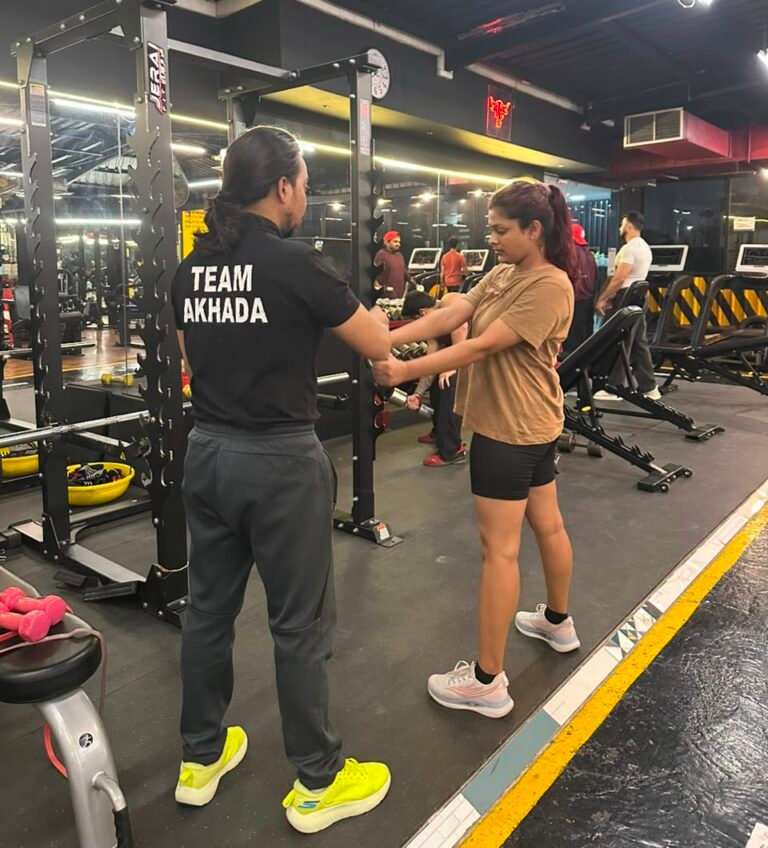
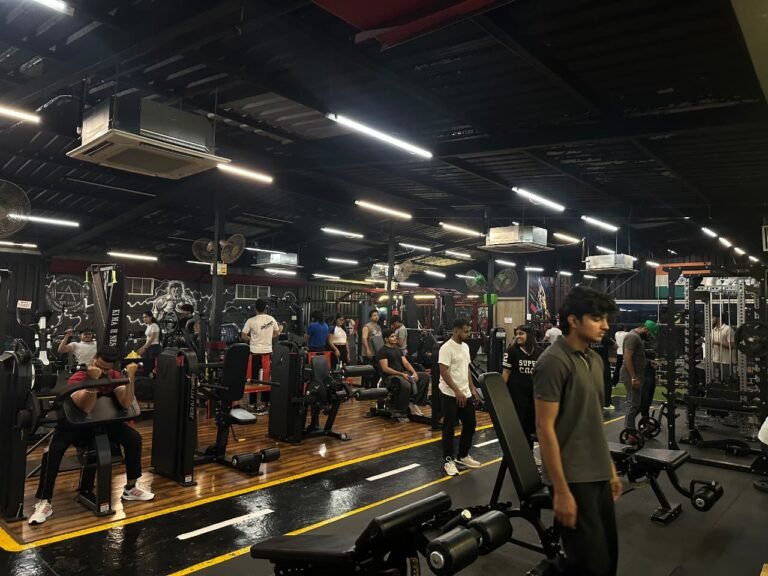
At Akhada – The Right Track Gym, Indore, functional training is used to help members improve strength, mobility, conditioning, coordination, and overall physical performance.
What Is Functional Training?
Functional training is a form of exercise designed to improve the body’s ability to perform movements efficiently and safely.
Common functional movement patterns include:
- Squatting
- Lunging
- Pushing
- Pulling
- Rotating
- Carrying
- Bending
- Jumping
- Crawling
Exercises can involve bodyweight, dumbbells, kettlebells, resistance bands, medicine balls, battle ropes, sleds, and other training equipment.
The goal isn’t simply to make a particular muscle bigger. Functional training aims to improve how different parts of your body work together.
10 Major Benefits of Functional Training
1. Builds Everyday Strength
One of the biggest benefits of functional training is improved strength for everyday activities.
Exercises such as squats, lunges, rows, carries, and presses can help prepare your body for activities like:
- Carrying groceries
- Lifting objects
- Climbing stairs
- Getting up from the floor
- Moving furniture
- Picking things up safely
Functional strength can make everyday movement feel easier and more controlled.
2. Improves Balance and Coordination
Functional exercises often require multiple muscles to work together.
Single-leg movements, lunges, carries, and controlled rotational exercises can challenge your balance and coordination.
Better coordination can improve movement efficiency both inside and outside the gym.
3. Strengthens the Core
Your core does much more than create visible abdominal muscles.
A strong core helps stabilize the spine and transfer force between the upper and lower body.
Functional exercises such as:
- Planks
- Farmer’s Carries
- Medicine Ball Exercises
- Dead Bugs
- Cable Rotations
can challenge your core in different ways.

4. Improves Mobility and Flexibility
Functional training often involves movements through different ranges of motion.
When combined with dedicated mobility work, it can help improve movement quality around important areas such as:
- Hips
- Shoulders
- Ankles
- Thoracic spine
Better mobility can help you perform exercises with improved technique and control.
5. Supports Better Posture
Modern lifestyles often involve long periods of sitting and limited movement.
Functional training can strengthen the muscles involved in posture while encouraging better body awareness and movement patterns.
Exercises targeting the back, shoulders, core, hips, and glutes can contribute to better overall movement mechanics.
6. Improves Cardiovascular Fitness
Functional workouts can be structured as circuits with controlled rest periods.
For example:
Squats → Battle Ropes → Push-Ups → Kettlebell Swings → Walking Lunges
Performing exercises continuously can challenge both your muscles and cardiovascular system.
This makes functional circuit training a time-efficient way to combine strength and conditioning.
7. Helps With Weight Management
Functional training can involve multiple large muscle groups and can be physically demanding.
When combined with appropriate nutrition and an overall active lifestyle, functional workouts can support healthy weight management.
However, fat loss ultimately depends on maintaining an appropriate energy balance over time rather than relying on one specific exercise.
8. Develops Athletic Performance
Functional training is also valuable for athletes.
Movements involving acceleration, deceleration, jumping, pushing, pulling, rotation, and changes of direction can help develop physical qualities relevant to many sports.
Depending on the program, functional training can improve:
- Strength
- Power
- Agility
- Coordination
- Balance
- Conditioning
9. Makes Workouts More Engaging
Traditional gym workouts can sometimes become repetitive.
Functional training allows trainers to combine different exercises and equipment, creating dynamic workouts.
For example, a session could include:
- Kettlebell Swings
- Box Jumps
- Battle Ropes
- Medicine Ball Slams
- Sled Pushes
- Walking Lunges
This variety can make training more enjoyable and help maintain motivation.
10. Improves Overall Physical Fitness
Functional training can combine several fitness components in one workout:
Strength + Mobility + Balance + Coordination + Endurance + Stability
This makes it particularly useful for people who want comprehensive fitness rather than focusing on only one physical quality.
Best Functional Training Exercises
A functional workout can include many different exercises depending on your fitness level.
Lower Body
- Squats
- Lunges
- Step-Ups
- Split Squats
- Kettlebell Swings
Upper Body
- Push-Ups
- Dumbbell Press
- Rows
- Overhead Press
- Pull-Ups
Core
- Planks
- Dead Bugs
- Pallof Press
- Medicine Ball Rotations
Full Body
- Farmer’s Carry
- Sled Push
- Battle Ropes
- Medicine Ball Slams
- Turkish Get-Up
Sample Functional Training Workout
Warm-Up – 5–10 Minutes
- Arm Circles
- Hip Mobility
- Bodyweight Squats
- Walking Lunges
- Light Cardio
Main Circuit
Exercise 1: Goblet Squats – 12 reps
Exercise 2: Push-Ups – 10 reps
Exercise 3: Kettlebell Swings – 15 reps
Exercise 4: Walking Lunges – 10 each leg
Exercise 5: Battle Ropes – 30 seconds
Exercise 6: Farmer’s Carry – 30–40 seconds
Exercise 7: Plank – 30–45 seconds
Complete 2–4 rounds, depending on your fitness level.
Beginners should start with manageable intensity and focus on technique before increasing volume or speed.
📷 Image Placeholder 4
Insert an image showing a complete functional circuit at Akhada Gym.
Functional Training vs Traditional Strength Training
Functional training and traditional strength training aren’t competitors. They can complement each other.
| Functional Training | Traditional Strength Training |
|---|---|
| Focuses on movement patterns | Often focuses on specific lifts or muscles |
| Improves coordination | Excellent for developing strength |
| Often uses multiple muscle groups | Can allow highly targeted training |
| Can include balance and mobility | Often emphasizes progressive resistance |
| Useful for everyday movement | Excellent for muscle and strength development |
A well-designed fitness program can include both functional and traditional strength training.
Who Can Benefit From Functional Training?
Functional training can be adapted for many people, including:
- Beginners
- Working professionals
- Fitness enthusiasts
- Athletes
- Older adults
- People returning to exercise
- Individuals looking to improve general fitness
The exercises, intensity, and complexity should be adjusted according to individual ability and experience.
How Often Should You Do Functional Training?
For many people, 2–4 functional training sessions per week can fit well into a balanced fitness program.
Your ideal frequency depends on:
- Training experience
- Fitness goals
- Workout intensity
- Recovery
- Other physical activities
Rest and recovery should be considered when planning your weekly training schedule.
Common Functional Training Mistakes
Avoid these mistakes when starting functional training:
❌ Performing exercises too quickly
❌ Sacrificing technique for heavier weights
❌ Starting with advanced movements
❌ Ignoring warm-ups
❌ Doing too much volume too soon
❌ Treating every workout as maximum intensity
❌ Ignoring recovery
Good functional training should challenge you while still allowing you to maintain proper movement quality.
Why Choose Akhada – The Right Track Gym, Indore?
At Akhada – The Right Track Gym, functional training is designed around your fitness level and goals.
Our training environment combines:
✅ Certified Trainers
✅ Functional Training Equipment
✅ Customized Workout Plans
✅ Strength & Conditioning
✅ Circuit Training
✅ Mobility Training
✅ Personal Training
✅ Progress Tracking
✅ Supportive Fitness Environment
Whether you want to improve everyday strength, lose body fat, build muscle, increase endurance, or improve athletic performance, our trainers can help you develop a structured training routine.
📍 Visit Akhada – The Right Track Gym
Address:
Press Complex, AB Road, Near LIG Square, Indore, Madhya Pradesh – 452008
Phone:
📞 9111100683
Website:
🌐 akhadatrt.com
Looking for functional training in Indore? Visit Akhada and talk to our trainers about a workout plan designed around your goals.
Frequently Asked Questions
What is functional training good for?
Functional training can improve strength, balance, coordination, mobility, stability, endurance, and movement quality for everyday activities and sports.
Is functional training good for beginners?
Yes. Functional exercises can be modified for beginners. Learning basic movement patterns and proper technique should come before advanced exercises.
Can functional training help with weight loss?
It can contribute to energy expenditure and overall fitness. Combined with appropriate nutrition and regular activity, it can be part of an effective weight-management program.
Is functional training better than weight training?
Neither is universally better. Functional training and traditional weight training serve different purposes and can be combined depending on your goals.
Can functional training build muscle?
Yes. Functional exercises involving progressive resistance can contribute to muscle development, although a dedicated hypertrophy program may be more suitable when maximizing muscle growth is the primary goal.
Conclusion
The biggest functional training benefits go beyond the gym. By training movements rather than focusing only on individual muscles, functional workouts can help improve strength, balance, coordination, mobility, endurance, and overall physical performance.
From carrying groceries to climbing stairs, playing sports, or simply moving with greater confidence, functional strength can make everyday activities more efficient.
If you’re looking for functional training in Indore, visit Akhada – The Right Track Gym and discover a structured approach to building strength that carries over into everyday life.
Train for the gym. Train for life. Train functionally.