How Progressive Training Helps Build Strength
Building strength at the gym is not just about lifting heavy weights. It is about following a structured workout routine, challenging your muscles gradually, and allowing your body enough time to recover.
If you perform the same exercises with the same weights and repetitions for months, your progress may eventually slow down. This is where progressive training becomes important.
Progressive training helps your body adapt to gradually increasing physical demands. Whether your goal is muscle growth, improved stamina, or overall fitness, following a progressive approach can help you achieve consistent results.
Let’s understand what progressive training is, how it works, and how you can apply it to your gym routine.
What Is Progressive Training?
Progressive training is a structured approach in which you gradually increase the challenge of your workouts as your body becomes stronger and more capable.
One of the most common methods is called progressive overload.
Progressive overload means gradually increasing the demands placed on your muscles over time. This can be achieved by increasing the weight, repetitions, sets, training difficulty, or improving exercise control.
For example:
- Week 1: Bench Press – 20 kg for 10 repetitions
- Week 2: Bench Press – 20 kg for 11 repetitions
- Week 3: Bench Press – 20 kg for 12 repetitions
- Week 4: Bench Press – 22.5 kg for 10 repetitions
This is a simple example of progressive overload. The goal is not to increase weight every workout but to improve performance gradually while maintaining proper technique.
How Does Progressive Training Build Strength?
When you challenge your muscles through resistance training, your body adapts to handle that workload more effectively.
Strength improvements happen through several adaptations.
1. Improves Muscle Strength
Progressively increasing resistance encourages your muscles to adapt to greater physical demands.
Over time, your muscles become better equipped to produce force, helping you lift heavier weights and perform exercises more efficiently.
2. Improves Nervous System Efficiency
Strength is not only about muscle size. Your nervous system also plays an important role.
As you practise resistance exercises, your brain and muscles become better coordinated. Your body learns to recruit and coordinate muscle fibres more effectively.
This is one reason beginners can experience noticeable strength improvements even before significant muscle growth occurs.
3. Supports Muscle Growth
When combined with appropriate training volume, nutrition, and recovery, progressive overload can support muscle hypertrophy.
As your muscles adapt to training, gradually increasing the challenge helps provide a continued stimulus for development.
4. Improves Workout Performance
Following a progressive workout plan helps you track improvements in:
- Weight lifted
- Number of repetitions
- Sets completed
- Exercise technique
- Movement control
- Overall workout performance
These measurable improvements help you understand whether your training programme is working.
5 Effective Ways to Apply Progressive Overload
You do not always need to lift heavier weights to make progress. There are several ways to increase the challenge of your workout.
1. Increase the Weight Gradually
This is one of the most common methods of progressive overload.
For example, if you can comfortably perform 10 repetitions of a dumbbell shoulder press with 5 kg weights, you may gradually move to a heavier weight once your technique and control are consistent.
Avoid increasing weight if it forces you to compromise your form.
2. Increase Repetitions
You can improve your performance by performing more repetitions with the same weight.
Example:
- Week 1: 8 repetitions
- Week 2: 9 repetitions
- Week 3: 10 repetitions
- Week 4: 12 repetitions
Once you can comfortably reach the upper end of your target repetition range, consider increasing the resistance slightly.
3. Increase Training Sets
Adding an extra set can increase your total training volume.
For example:
- Initial training: 2 sets of squats
- Later training: 3 sets of squats
However, adding more sets is not always necessary. Your total weekly training volume should match your experience and recovery capacity.
4. Improve Exercise Technique
Progress does not always mean lifting heavier weights.
You can also improve your training by:
- Using a controlled range of motion
- Maintaining correct body positioning
- Avoiding unnecessary momentum
- Improving stability
- Performing repetitions consistently
Better technique helps you train the intended muscles more effectively.
5. Increase Training Difficulty Gradually
Once you become comfortable with an exercise, you can introduce a more challenging variation.
For example:
- Bodyweight Squat → Goblet Squat → Barbell Squat
- Knee Push-Up → Standard Push-Up → Weighted Push-Up
- Assisted Pull-Up → Bodyweight Pull-Up
Choose variations according to your ability and training experience.
Progressive Training Example for Different Exercises
Here is a simple example of how you can track progress in a strength-training routine.
| Exercise | Starting Performance | Progression Goal |
|---|---|---|
| Bench Press | 20 kg × 8 reps | 20 kg × 10 reps |
| Squats | 30 kg × 8 reps | 30 kg × 10 reps |
| Lat Pulldown | 25 kg × 10 reps | 30 kg × 10 reps |
| Shoulder Press | 5 kg × 8 reps | 5 kg × 10 reps |
| Bicep Curl | 5 kg × 10 reps | 6 kg × 10 reps |
These are illustrative examples, not prescribed starting weights. Choose resistance that suits your ability.
How Beginners Can Follow Progressive Training
If you are new to the gym, avoid rushing to lift heavy weights.
Your first priority should be learning the correct exercise technique and developing consistency.
Follow these basic steps:
Step 1: Start with manageable resistance
Choose weights that allow you to perform the exercise with control.
Step 2: Learn proper technique
Understand the movement before increasing the difficulty.
Step 3: Track your workouts
Record exercises, weights, sets, and repetitions after each session.
Step 4: Increase the challenge gradually
When you can complete your target repetitions with good form, consider increasing resistance or repetitions.
Step 5: Give your body time to recover
Rest, sleep, and proper nutrition are essential for strength development.
Why Tracking Your Workout Progress Matters
One of the biggest mistakes people make at the gym is training without recording their performance.
Without tracking, it becomes difficult to understand whether you are improving or simply repeating the same workout.
Maintain a workout diary or use a fitness app to record:
- Exercise names
- Weight used
- Number of sets
- Repetitions completed
- Workout dates
- Notes about technique and difficulty
For example, if you performed 10 repetitions of bench press with 20 kg last month and can now perform 12 repetitions with the same weight, that is measurable progress.
Remember, strength improvement is not always linear. Some workouts may feel easier, while others may feel more challenging due to sleep, stress, or recovery.
Common Progressive Training Mistakes to Avoid
1. Increasing Weight Too Quickly
Lifting heavier weights without developing proper technique can increase injury risk. Progress gradually.
2. Ignoring Recovery
Training the same muscles intensely without adequate recovery can affect performance and increase fatigue.
3. Changing Exercises Too Frequently
Changing your workout every few days makes it difficult to track improvements. Maintain a structured programme long enough to measure progress.
4. Focusing Only on Weight
Increasing repetitions, improving technique, and controlling movements are also meaningful forms of progress.
5. Comparing Your Progress with Others
Every individual has a different fitness level, training history, and recovery capacity. Focus on improving your own performance.
The Role of Nutrition and Recovery in Progressive Training
Progressive training provides the stimulus, but your body needs proper nutrition and recovery to adapt.
Protein Intake
Protein supports muscle repair and development. Include suitable protein sources such as:
- Paneer
- Milk and curd
- Soybeans and tofu
- Dal and other pulses
- Eggs, if included in your diet
Balanced Nutrition
Your body needs sufficient calories, carbohydrates, healthy fats, vitamins, and minerals to support regular training.
Proper Sleep
Aim for around 7–9 hours of sleep per night as an adult. Good sleep supports recovery and workout performance.
Rest Days
Rest days help your body recover from training stress. Your routine should balance challenging workouts with adequate recovery.
Final Thoughts: Consistency Is the Key to Strength
Progressive training is one of the foundations of an effective strength-training programme.
Instead of trying to lift the heaviest weight every day, focus on gradual improvement. Increase resistance when appropriate, improve your technique, track your performance, and give your body enough time to recover.
Remember, strength is built through consistent effort over time, not overnight results.
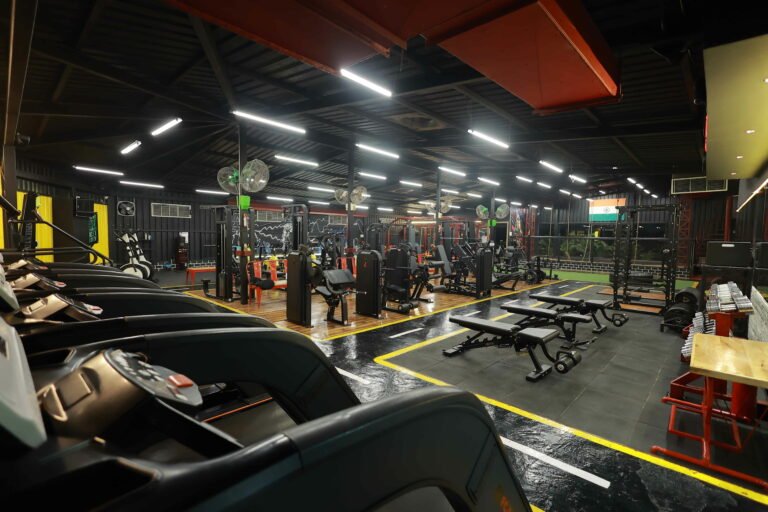
At Akhada – The Right Track Gym, Indore, you can work towards your fitness goals through structured strength training, functional workouts, and personal training guidance.
Start Building Strength at Akhada – The Right Track Gym
Looking for a Best Gym in Indore to improve your strength, build muscle, and develop a consistent workout routine?
Visit Akhada – The Right Track Gym and take the next step towards better fitness.
Address: 3rd Floor, Press Complex, LIG Circle, AB Road, Near Dainik Bhaskar, Indore, Madhya Pradesh – 452011.
Contact: +91 9111100683
Frequently Asked Questions (FAQs)
1. What is progressive overload in strength training?
Progressive overload is the gradual increase in training demands through additional weight, repetitions, sets, or exercise difficulty to encourage the body to adapt.
2. Should I increase weights every week?
No. Increase weights when you can perform your current workload with proper technique and control. Progress depends on your training experience and recovery.
3. Can beginners use progressive overload?
Yes. Beginners can use progressive overload by gradually improving repetitions, technique, resistance, or exercise difficulty.
4. Does progressive training help build muscle?
Yes. Progressive overload, combined with appropriate training volume, nutrition, and recovery, supports muscle growth.
5. How do I know if my strength is improving?
Track your workout performance. Being able to lift more weight, complete additional repetitions, or perform exercises with better control can indicate improvement.
6. Is progressive overload necessary for muscle growth?
Gradually increasing or adapting the training stimulus is important for continued progress. However, it does not mean you must increase weight in every workout.
7. What happens if I stop increasing weights?
You can still improve through better technique, more repetitions, improved range of motion, or other training adjustments. However, repeating the exact same workload indefinitely may eventually limit further progress.