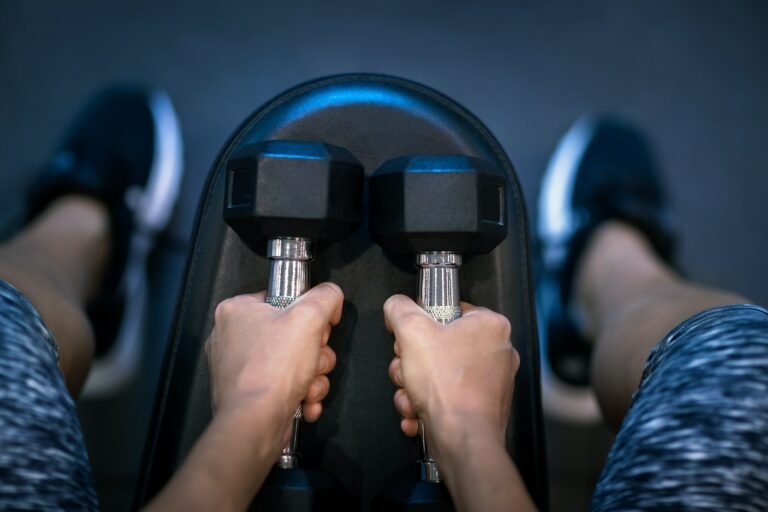
Compound vs Isolation Exercises: Which Should You Choose?
When you start working out at the gym, one common question is whether you should focus on compound exercises or isolation exercises. Both play an important role in building strength, developing muscles, and improving overall fitness. However, they work differently and serve different purposes.
Compound exercises involve multiple muscle groups and joints in a single movement, while isolation exercises primarily target one muscle group and involve movement around one joint.
So, which should you choose? The answer depends on your fitness goals, training experience, and workout routine. Let’s understand both types of exercises and how to use them effectively.
What Are Compound Exercises?
Compound exercises are movements that involve two or more joints and multiple muscle groups working together. They allow you to train several muscles simultaneously and develop overall strength.
These exercises are commonly used in strength training because they help improve coordination, stability, and functional movement.
Examples of Compound Exercises
1. Squats
Squats primarily target the quadriceps and glutes while also involving the hamstrings, core, and other stabilising muscles.
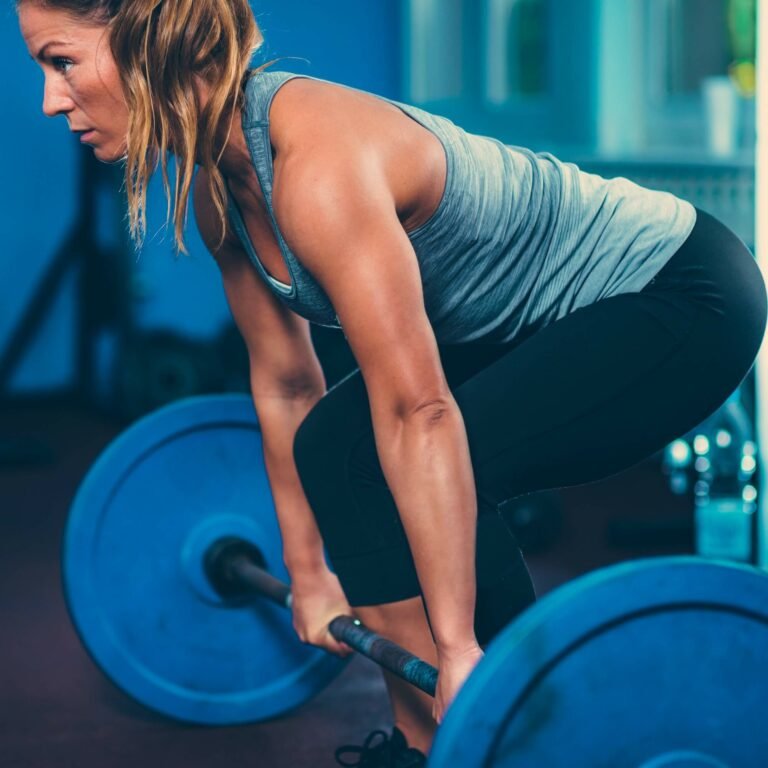
2. Deadlifts
Deadlifts work several muscle groups, including the hamstrings, glutes, back, and core.
3. Bench Press
The bench press mainly trains the chest while involving the shoulders and triceps.
4. Pull-Ups
Pull-ups target the back muscles and biceps while engaging the core.
5. Overhead Shoulder Press
This movement primarily works the shoulders while involving the triceps and core for stability.
Benefits of Compound Exercises
- Build overall strength: Multiple muscle groups work together during each movement.
- Improve workout efficiency: You can train several muscles in less time.
- Develop coordination: Compound movements require different muscles to work together.
- Support functional fitness: Many movements resemble everyday activities such as lifting, pushing, and standing.
- Help build muscle: They allow you to progressively increase resistance as your strength improves.
What Are Isolation Exercises?
Isolation exercises primarily target one muscle group and generally involve movement around a single joint. They are useful when you want to give a particular muscle more focused attention.
These exercises are commonly included after compound movements to provide additional training volume.
Examples of Isolation Exercises
1. Bicep Curls
Bicep curls primarily target the biceps and involve movement at the elbow joint.
2. Triceps Pushdowns
This exercise focuses on the triceps and helps develop the back of the upper arms.
3. Leg Extensions
Leg extensions specifically target the quadriceps muscles.
4. Hamstring Curls
Hamstring curls focus on the muscles at the back of your thighs.
5. Lateral Raises
Lateral raises primarily target the side deltoids, helping develop shoulder width.
Benefits of Isolation Exercises
- Target specific muscles: They allow you to focus on individual muscle groups.
- Address muscle imbalances: They can help strengthen muscles that receive less attention during compound movements.
- Add training volume: They provide additional work for a muscle after your main lifts.
- Support muscle development: They help focus on areas where you want more muscular development.
- Offer exercise flexibility: Many isolation movements can be performed with machines, cables, or dumbbells.
Compound vs Isolation Exercises: Key Differences
| Factor | Compound Exercises | Isolation Exercises |
|---|---|---|
| Muscle groups | Multiple muscles | Primarily one muscle |
| Joint movement | Multiple joints | Generally one joint |
| Main purpose | Overall strength and muscle development | Focused muscle training |
| Workout efficiency | Trains several muscles together | Targets specific muscles |
| Examples | Squats, bench press, pull-ups | Bicep curls, leg extensions |
| Training role | Often used early in a workout | Often used after main lifts |
Which Exercises Should You Choose for Muscle Growth?
If your goal is muscle growth, you do not necessarily have to choose one over the other.
A well-designed strength-training programme can include both.
Compound exercises help you develop overall strength and train multiple muscles together. Isolation exercises allow you to add focused work to specific muscle groups.
For example, during a chest workout:
- Bench Press – 3 sets
- Incline Dumbbell Press – 3 sets
- Cable Fly – 3 sets
- Triceps Pushdown – 3 sets
The pressing exercises train multiple muscles, while cable flyes and triceps pushdowns provide more focused work.
Remember that muscle growth depends on progressive overload, sufficient training volume, proper nutrition, and recovery—not simply on the type of exercise you perform.
Which Is Better for Beginners?
For beginners, learning basic compound movements can help develop strength, coordination, and movement skills.
However, isolation exercises are also useful because they allow beginners to understand how individual muscles work and build strength in specific areas.
A beginner-friendly routine may include:
- Bodyweight Squats
- Machine Chest Press
- Lat Pulldown
- Seated Shoulder Press
- Bicep Curls
- Triceps Pushdowns
Start with manageable resistance, learn the correct technique, and gradually increase the difficulty.
If you are unsure about exercise form, take guidance from a qualified fitness trainer.
How to Combine Compound and Isolation Exercises
The most practical approach for many gym-goers is to combine both exercise types in one structured workout.
A useful sequence is:
Step 1: Start with compound exercises
Perform your main movements when you are relatively fresh. Examples include squats, bench presses, rows, and overhead presses.
Step 2: Add isolation exercises
After your main lifts, include exercises that target specific muscles you want to develop further.
Step 3: Focus on correct technique
Avoid using excessive weight at the expense of proper movement.
Step 4: Apply progressive overload
Gradually increase weight, repetitions, or training difficulty while maintaining good form.
Step 5: Allow adequate recovery
Give trained muscles enough time to recover before another demanding session.
Sample Workout: Combining Both Exercise Types
Here is an example of an upper-body workout combining compound and isolation movements.
| Exercise | Type | Sets |
|---|---|---|
| Bench Press | Compound | 3 |
| Lat Pulldown | Compound | 3 |
| Shoulder Press | Compound | 3 |
| Bicep Curl | Isolation | 2–3 |
| Triceps Pushdown | Isolation | 2–3 |
| Lateral Raise | Isolation | 2–3 |
Adjust the exercises, sets, and repetitions according to your experience, fitness goals, and recovery capacity.
Common Mistakes to Avoid
1. Ignoring compound exercises
Only performing isolation exercises may leave important movement patterns and muscle groups undertrained.
2. Avoiding isolation exercises completely
Compound movements are valuable, but they may not provide all the focused training volume you want for every muscle.
3. Lifting too heavy
Using excessive weight can compromise technique and increase the risk of injury.
4. Not following a structured routine
Randomly changing exercises can make it difficult to track progress.
5. Ignoring recovery
Muscles need sufficient recovery, nutrition, and sleep to adapt to training.
Final Verdict: Compound or Isolation Exercises?
There is no need to treat compound and isolation exercises as competitors. Both have a place in an effective workout programme.
Choose compound exercises to develop overall strength and train multiple muscle groups efficiently. Add isolation exercises to target specific muscles and complete your training programme.
The best approach is to use both strategically, based on your fitness goals and individual requirements.
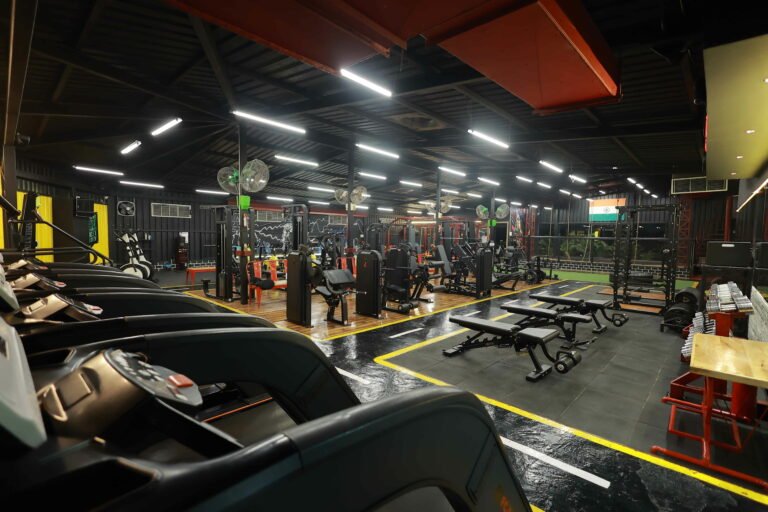
At Akhada – The Right Track Gym, Indore, you can work towards your fitness goals with structured workouts, strength training, functional exercises, and personal training guidance.
Start Your Fitness Journey at Akhada – The Right Track Gym
Looking for a Best Gym in Indore where you can work on strength, muscle development, and overall fitness?
Visit Akhada – The Right Track Gym and get started with a workout routine suited to your goals.
Address: 3rd Floor, Press Complex, LIG Circle, AB Road, Near Dainik Bhaskar, Indore, Madhya Pradesh – 452011.
Contact: +91 9111100683
Frequently Asked Questions (FAQs)
1. Are compound exercises better than isolation exercises?
Neither is universally better. Compound exercises train multiple muscles together, while isolation exercises focus on specific muscles. Both can support muscle development.
2. Can I build muscle with only compound exercises?
Yes, compound exercises can build significant muscle. However, isolation exercises can help you provide additional focused training to specific muscles.
3. Should beginners start with compound exercises?
Beginners can benefit from learning basic compound movements with manageable resistance and proper technique. Suitable isolation exercises can also be included.
4. Should compound exercises come before isolation exercises?
In many workouts, compound exercises are performed first because they require greater coordination and involve multiple muscle groups. Isolation exercises are commonly performed afterwards.
5. How many compound exercises should I do in one workout?
There is no fixed number. It depends on your training split, experience, goals, and recovery. A balanced workout often includes a few main compound movements followed by selected accessory exercises.
6. Do isolation exercises help correct muscle imbalances?
They can help strengthen specific muscles that may be underdeveloped, although correcting an imbalance may also require reviewing technique, movement patterns, and overall programming.