
When it comes to fat loss and fitness, two popular training methods often come up: Zone 2 cardio and HIIT (High-Intensity Interval Training).
Both can improve cardiovascular fitness and support weight management, but they work at very different intensities.
So, is Zone 2 cardio better than HIIT for fat loss? Or should you choose HIIT?
The answer isn’t simply one or the other. Your best option depends on your fitness level, training schedule, recovery, preferences, and overall calorie balance.
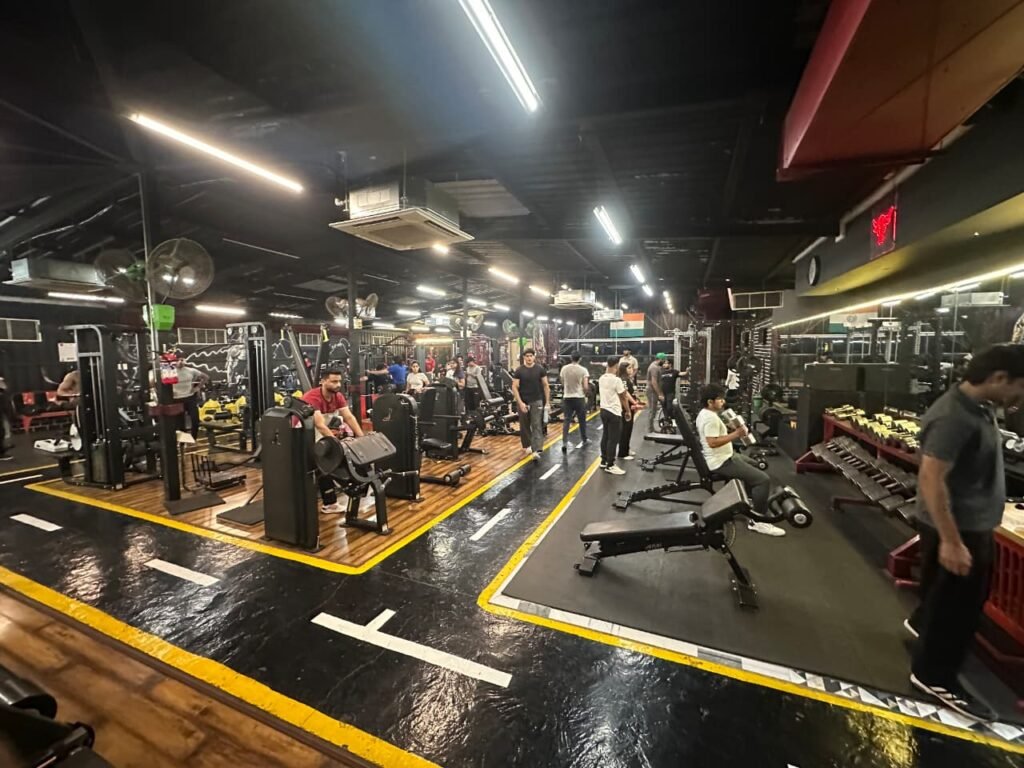
At Akhada – The Right Track Gym, Indore, both steady-state cardio and high-intensity training can be incorporated into a well-designed fitness program depending on an individual’s goals.
What Is Zone 2 Cardio?
Zone 2 cardio is a form of low-to-moderate intensity aerobic exercise where you maintain a controlled effort for an extended period.
At this intensity, you should generally be able to speak in short sentences without being completely out of breath.
Common Zone 2 activities include:
- Brisk walking
- Incline treadmill walking
- Cycling
- Stationary bike
- Elliptical
- Light jogging
- Rowing at an easy-to-moderate pace
The exact heart-rate range varies between individuals, so relying only on a generic heart-rate number isn’t always ideal.
What Is HIIT?
HIIT stands for High-Intensity Interval Training.
It involves alternating periods of relatively intense exercise with recovery or lower-intensity periods.
For example:
30 seconds hard → 60 seconds easy → repeat
A HIIT workout may include:
- Sprints
- Cycling intervals
- Rowing
- Burpees
- Mountain climbers
- Jumping exercises
- Kettlebell movements
HIIT sessions are usually shorter than traditional steady-state cardio but can feel significantly more demanding.
📊 Zone 2 Cardio vs HIIT
| Feature | Zone 2 Cardio | HIIT |
|---|---|---|
| Intensity | Low–moderate | High |
| Workout Duration | Usually longer | Usually shorter |
| Recovery Demand | Lower | Higher |
| Sustainability | High | Moderate |
| Cardiovascular Benefits | Excellent | Excellent |
| Muscle Fatigue | Relatively low | Higher |
| Beginner Friendly | Generally yes | Needs modification |
| Frequency | Can be done frequently | Usually needs more recovery |
Which Burns More Fat?
This is where things can get confusing.
During lower-intensity exercise, your body may rely more heavily on fat as a fuel source. However, using a higher percentage of fat during a workout doesn’t automatically mean you’ll lose more body fat overall.
Fat loss primarily depends on your overall energy balance over time.
That means your diet, total physical activity, training, sleep, recovery, and consistency all matter.
So rather than asking:
“Which workout burns more fat during the session?”
A better question is:
“Which training approach can I consistently perform while supporting my overall calorie deficit and fitness goals?”
Is Zone 2 Better for Fat Loss?
Zone 2 can be an excellent tool for people who want to increase their activity without creating excessive fatigue.
Benefits include:
✅ Easy to sustain
✅ Lower recovery demands
✅ Can increase weekly cardio volume
✅ Improves aerobic fitness
✅ Suitable for many beginners
✅ Can complement strength training
For example, someone following a strength-training program could add incline walking or cycling on selected days without significantly interfering with their recovery.
Is HIIT Better for Fat Loss?
HIIT can be highly time-efficient.
A properly designed interval workout can provide a strong cardiovascular stimulus in a relatively short period.
Potential benefits include:
✅ Time-efficient workouts
✅ Improves cardiovascular fitness
✅ Can improve high-intensity work capacity
✅ Adds variety to training
✅ Can increase overall energy expenditure
However, HIIT is demanding. Doing extremely intense sessions every day isn’t necessary and can make recovery more difficult.
Zone 2 vs HIIT: Which One Should Beginners Choose?
If you’re new to exercise, Zone 2-style cardio is generally easier to introduce and control.
You can begin with:
20–30 minutes of brisk walking or cycling
and gradually increase duration as your fitness improves.
HIIT can also be adapted for beginners, but the intensity should be controlled. You don’t need all-out sprints or advanced exercises to benefit from interval training.
The goal should be progressive training rather than maximum intensity from day one.
Can You Combine Zone 2 and HIIT?
Absolutely!
In fact, combining different forms of cardio can be a practical strategy.
For example:
Monday
🏋️ Strength Training
Tuesday
🚶 Zone 2 Cardio – 30–40 minutes
Wednesday
🏋️ Strength Training
Thursday
⚡ HIIT – 15–20 minutes
Friday
🏋️ Strength Training
Saturday
🚴 Zone 2 Cardio – 30–45 minutes
Sunday
😴 Rest / Active Recovery
Your exact schedule should depend on your fitness level, goals, training volume, and recovery.
Zone 2 + Strength Training for Fat Loss
If your primary goal is fat loss while maintaining muscle, don’t overlook strength training.
Resistance training can help you build and maintain lean muscle while you’re losing weight.
A well-rounded program may therefore include:
Strength Training + Zone 2 Cardio + Occasional HIIT + Nutrition + Recovery
This is often more sustainable than relying entirely on cardio.
What About Belly Fat?
One common misconception is that a particular type of cardio can specifically burn belly fat.
Unfortunately, spot reduction doesn’t work that way.
Doing more HIIT or Zone 2 cardio doesn’t selectively remove abdominal fat.
As overall body fat decreases, abdominal fat may also decrease, but where and how quickly fat is lost varies between individuals.
For better results, focus on:
- Consistent training
- Appropriate nutrition
- Adequate protein
- Strength training
- Daily activity
- Quality sleep
- Long-term consistency
How Much Zone 2 Cardio Should You Do?
There’s no universal number that works for everyone.
A beginner might start with:
20–30 minutes × 2–3 sessions per week
and gradually increase duration.
Someone with more training experience may comfortably perform longer sessions.
The important factor is progression.
Instead of suddenly doing hours of cardio, gradually increase your weekly volume while monitoring fatigue and recovery.
How Often Should You Do HIIT?
HIIT doesn’t need to be performed every day.
For many recreational exercisers, 1–2 structured HIIT sessions per week can be enough to provide a high-intensity stimulus while leaving room for strength training and recovery.
The harder the session, the more important recovery becomes.
Common Mistakes With Zone 2 and HIIT
❌ Doing Every Cardio Session at Maximum Intensity
More intensity isn’t automatically better.
❌ Making Zone 2 Too Hard
If every “easy” cardio session becomes a hard workout, you’re missing the purpose of low-intensity training.
❌ Ignoring Strength Training
Cardio alone isn’t the complete solution for body composition.
❌ Expecting Quick Fat Loss
Sustainable fat loss takes time.
❌ Ignoring Nutrition
You can’t consistently out-train an unsuitable diet.
❌ Not Recovering
Sleep and rest are important parts of training.
So, Which Is Better for Fat Loss?
🥇 For maximum sustainability:
Zone 2 Cardio
⚡ For time-efficient high-intensity conditioning:
HIIT
💪 For maintaining/building muscle:
Strength Training
🔥 For a complete fat-loss strategy:
Strength Training + Cardio + Nutrition + Recovery
There is no single “best” cardio workout for everyone.
The best approach is the one you can perform consistently, recover from, and combine with an appropriate nutrition strategy.
Zone 2 Cardio vs HIIT: Final Verdict
If you enjoy walking, cycling, or incline treadmill sessions and want something sustainable, Zone 2 cardio can be an excellent choice.
If you’re short on time and enjoy challenging workouts, HIIT can provide an efficient cardiovascular stimulus.
And you don’t necessarily have to choose.
A combination of Zone 2, HIIT, strength training, and daily movement can create a balanced fitness routine.
The key isn’t finding the perfect workout.
The key is finding a training plan you can follow consistently.
Train Smarter at Akhada – The Right Track Gym, Indore
Looking for HIIT training, cardio workouts, strength training, or personal training in Indore?
At Akhada – The Right Track Gym, our trainers can help you build a structured fitness program based on your goals, fitness level, and training experience.
Our Training Options Include:
💪 Strength Training
🔥 HIIT Workouts
🚶 Cardio Training
⚡ Functional Training
🏋️ Personal Training
🔄 Circuit Training
🤸 Mobility Training
🥗 Nutrition Guidance
📊 Progress Tracking
Whether your goal is fat loss, muscle gain, improved endurance, or overall fitness, the focus is on sustainable progress.
📍 Visit Akhada – The Right Track Gym
Address:
Press Complex, AB Road, Near LIG Square, Indore, Madhya Pradesh – 452008
Phone:
📞 9111100683
Website:
🌐 akhadatrt.com
Looking for:
HIIT Training in Indore | Cardio Training in Indore | Fat Loss Gym in Indore | Personal Training in Indore
Frequently Asked Questions
Is Zone 2 cardio better than HIIT for fat loss?
Neither is universally better. Both can support fat loss when incorporated into a suitable training program and combined with an appropriate calorie deficit.
Can I do Zone 2 cardio every day?
Depending on your fitness level and recovery, low-intensity cardio can often be performed frequently. However, your total training load should still be managed.
How many times a week should I do HIIT?
Many people can benefit from 1–2 HIIT sessions per week, depending on their overall training program and recovery.
Should I do HIIT before or after weight training?
If strength and muscle development are priorities, performing demanding strength work while fresh is often preferable. HIIT can be scheduled separately or after strength training depending on the program.
Can Zone 2 cardio help reduce belly fat?
It can contribute to overall energy expenditure and fitness, but no cardio method can specifically target belly fat. Overall fat loss occurs through sustained energy balance.
Can beginners do HIIT?
Yes, but HIIT should be appropriately modified. Beginners should focus on movement quality and manageable intensity before progressing to harder intervals.